
The announcement came amid continued cross-border violence and growing international efforts to preserve a fragile ceasefire between the two sides.
In a social media post after speaking with Israeli Prime Minister Benjamin Netanyahu, Trump said both parties had committed to halting attacks through mediation efforts.
“Hezbollah has agreed that all shooting will stop that Israel will not attack them, and they will not attack Israel,” Trump wrote.
Trump also said Israeli troops would not advance toward Beirut, adding that forces heading in that direction had already been turned back.
Netanyahu confirmed speaking with Trump but emphasized that Israel would continue military operations in southern Lebanon and warned that Beirut could be targeted if Hezbollah attacks persist.
There was no immediate official response from Hezbollah.
The latest tensions are part of a broader conflict that has intensified along the Israel-Lebanon border in recent months, threatening regional stability and complicating wider diplomatic efforts involving Iran and the United States.
Lebanese authorities said Hezbollah had approved a proposal presented by US Secretary of State Marco Rubio under which Israel would refrain from striking Beirut’s southern suburbs while Hezbollah would halt attacks on northern Israel.
However, shortly after Trump’s statement, Israel reported missile launches from Lebanon and instructed residents in parts of northern Israel to seek shelter.
Israeli and Lebanese officials are expected to meet in Washington this week in an effort to expand protected areas and work toward a more comprehensive ceasefire agreement.
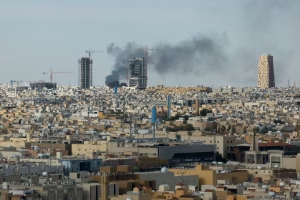
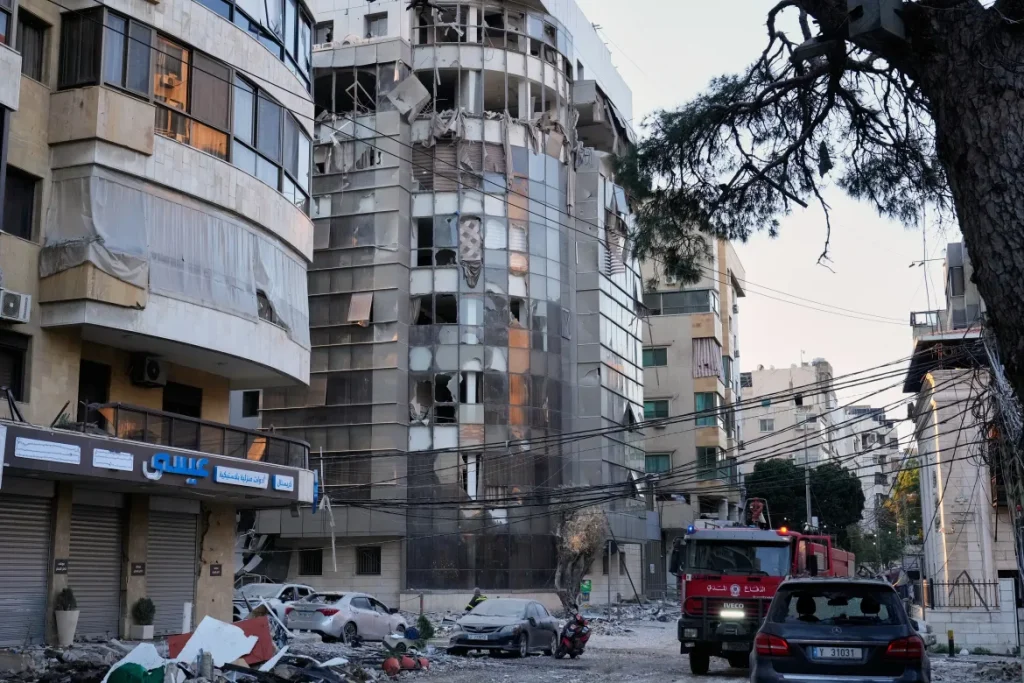
Earlier Monday, Israel ordered strikes on Beirut’s southern suburbs, accusing Hezbollah of violating the ceasefire and targeting Israeli communities.
The warning prompted many residents to flee Dahiyeh, a southern Beirut district known as a Hezbollah stronghold.
“We are worried. I am used to it but left for my parents,” Mohammed Farhat, a 23-year-old university student, told the Associated Press as he fled with his family.
According to Lebanon’s state-run National News Agency, overnight Israeli airstrikes killed six people in southern Lebanon, including a Syrian national. Another strike in the port city of Tyre caused significant damage to Jabal Amel Hospital, Lebanon’s Health Ministry said.
The Israeli military said it intercepted two projectiles launched from Lebanon and detected a suspicious aerial target in southern Lebanon. No injuries were reported.
Hezbollah said it had targeted Israeli troops near Zawtar al-Sharqieh and military infrastructure in Tiberias.
The latest violence comes ahead of rare direct talks between Israel and Lebanon, which began in Washington in April and are the first known negotiations between the two countries in more than three decades.
Iran said any ceasefire arrangement with the United States must also include Lebanon, while Saudi Arabia condemned Israel’s military operations and called on the international community to prevent further advances into Lebanese territory.
At the United Nations, Assistant Secretary-General Martha Pobee said Israel’s military push into Lebanon violates the country’s territorial integrity while also accusing Hezbollah of breaching UN resolutions requiring the group to disarm.
Lebanese Parliament Speaker Nabih Berri said he could guarantee Hezbollah’s commitment to a ceasefire.
“I can guarantee Hezbollah’s full, comprehensive and immediate commitment to a ceasefire,” Berri said. Original quote from statement reported by France 24/AP.
According to Lebanese authorities, the latest round of fighting has killed 3,433 people in Lebanon and displaced more than one million people.
Israeli officials say one soldier was killed overnight in a Hezbollah drone attack. According to Netanyahu’s office, at least 26 Israeli soldiers, one defense contractor and two civilians have been killed since the conflict intensified.
Despite renewed diplomatic efforts and signs of possible de-escalation, continued exchanges of fire highlight the challenges facing negotiators seeking to transform a fragile truce into a lasting ceasefire.