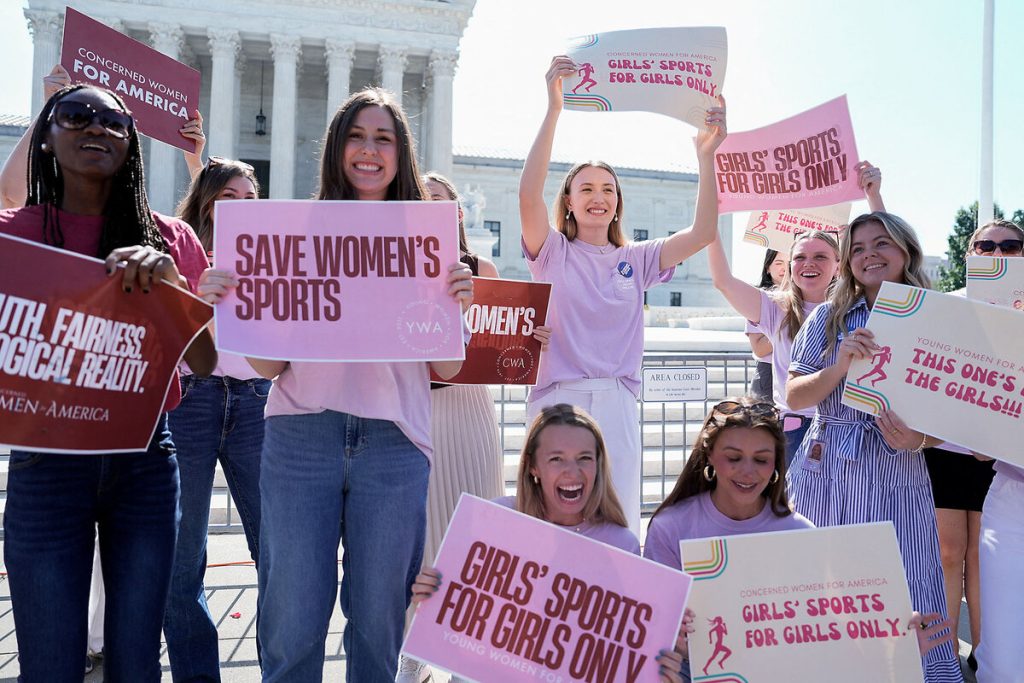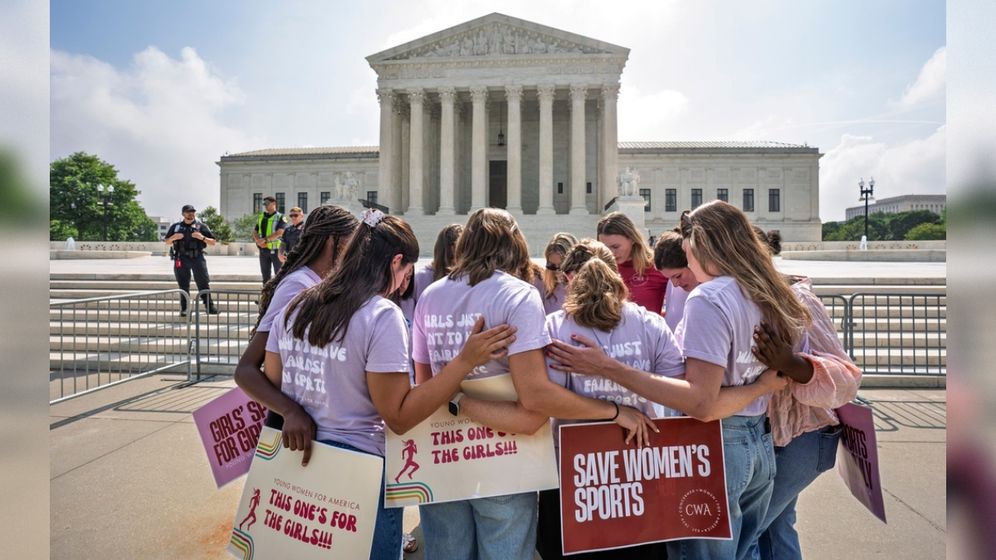
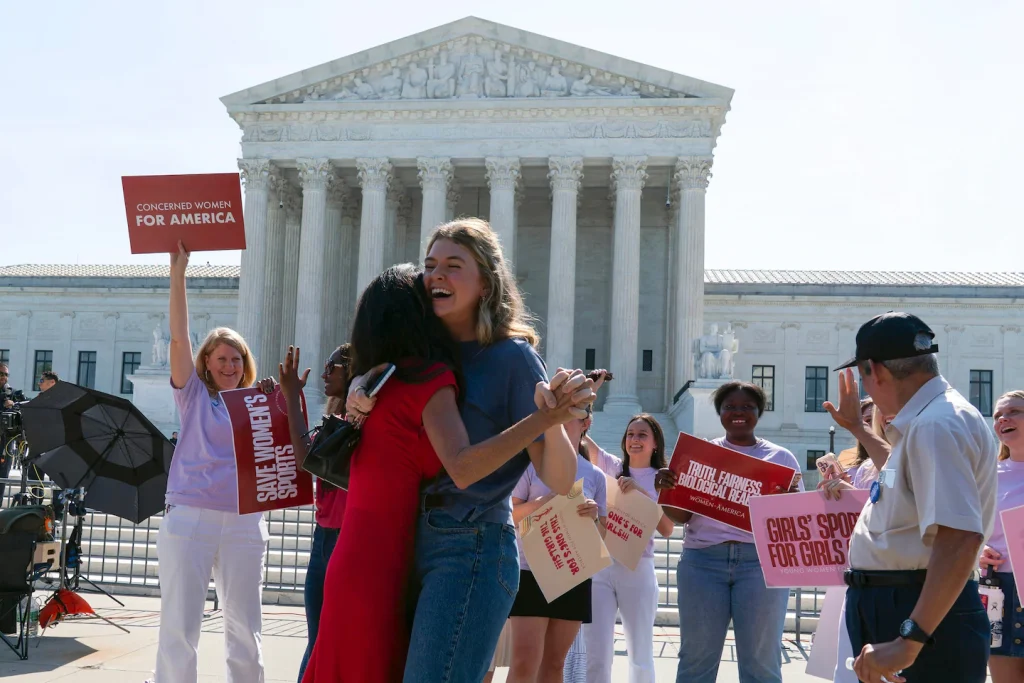

President Donald Trump, who has consistently opposed allowing transgender women to compete in female sports, welcomed the ruling on social media, describing it as a “major victory” for the American people.
First Lady Melania Trump also praised the decision, calling it a victory for women in sports. However, she added that she supports the rights of LGBTQ+ individuals, including transgender people, while emphasizing the importance of protecting fairness in women’s athletic competitions.
The ruling, issued on 30 June 2026, followed legal challenges brought by students in the states of Idaho and West Virginia, who argued that laws restricting transgender athletes from participating in girls’ and women’s sports should be struck down.
Idaho and West Virginia were among the first states to enact legislation requiring public school sports teams to be designated according to the sex assigned to athletes at birth. Supporters of these laws argue that they preserve fair competition by ensuring that athletes who were born male do not compete in female categories.
The lawsuits contended that such restrictions violate the Equal Protection Clause of the U.S. Constitution by discriminating against transgender students and denying them equal access to educational opportunities and school athletics.
Since Idaho first adopted its law in 2020, more than 20 U.S. states have enacted similar measures limiting participation in girls’ and women’s sports to athletes whose biological sex at birth is female.
Barbara Ehardt, the Idaho lawmaker who sponsored the state’s original legislation, said the measure was designed to protect the integrity of girls’ and women’s sports.
She said, “Boys and men should not be able to take opportunities away from girls and women in athletic competition because it is simply not fair.”
In 2025, President Trump signed an executive order directing federal agencies to prohibit transgender athletes from participating in girls’ and women’s sports at elementary schools, high schools, and colleges receiving federal support.
Following the executive order, the National Collegiate Athletic Association (NCAA) revised its eligibility policy, effectively restricting transgender athletes from competing in women’s collegiate sports.
The issue remains one of the most divisive cultural and legal debates in the United States, with supporters of the restrictions arguing they protect competitive fairness and opportunities for female athletes, while opponents contend the measures discriminate against transgender students and undermine their civil rights.