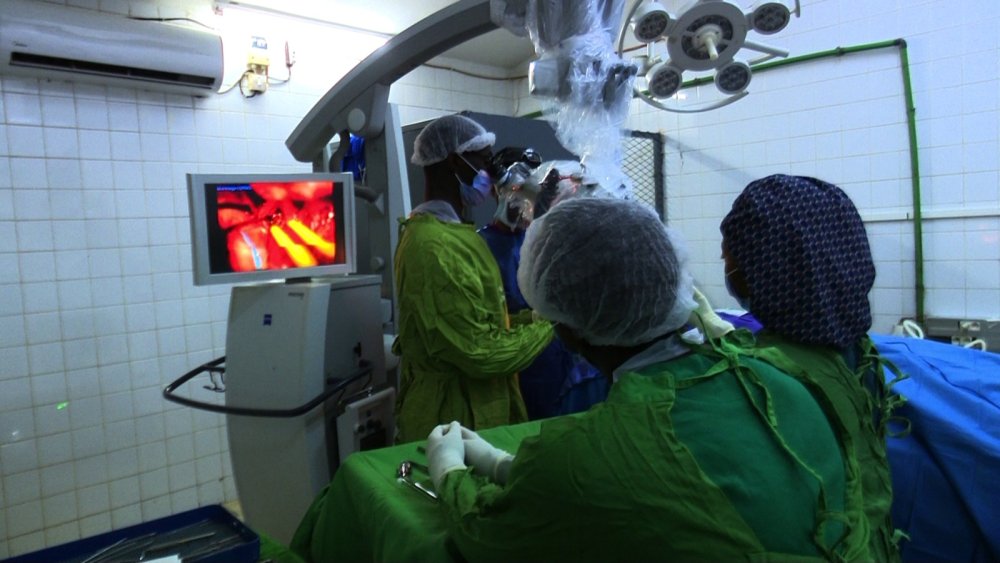

The initiative has been running for approximately three months, with specialists working in teams of up to eight across hospitals in Kigali and eight district hospitals.
Rwanda-Legacy of Hope President Rev. Osee Ntavuka said the organization plans to bring more specialists from Germany to Rwanda to introduce advanced surgical techniques and support doctors at Karongi Hospital.
“We have a team coming in January to provide training and perform surgeries related to colorectal cancer. We also want to equip Karongi Hospital with laparoscopy equipment because they do not currently have the necessary instruments. We expect the team from Germany to bring the equipment,” Ntavuka said.
He added that over the past 16 years, the organization has trained approximately 525 doctors, while the medical equipment and services it has provided are valued at RWF 4 billion.
Dr. Wissam Salbi, a UK-based specialist in neurosurgery and spinal surgery, said the visiting specialists work alongside Rwandan doctors to operate on patients with complex medical conditions while sharing their knowledge and expertise.
Mukamana Celine, a patient who underwent spinal surgery at the University Teaching Hospital of Kigali (CHUK), said she had previously lost hope of recovering, regaining her health and being able to speak again. She expressed gratitude to the doctors who treated her and said she was now recovering.
“I had really lost hope. I went from one place to another seeking treatment, but they could not identify my condition. Eventually, it was diagnosed, and I was given an appointment here. That is why I came,” she said.
CHUK Director of Medical Services Tuyisenge Lisine said the visits by specialists from the United Kingdom provide an important opportunity for local doctors to gain knowledge while helping patients who might otherwise have to seek treatment abroad.
“They come, and we work together. Since we are a teaching hospital where our students receive training, this collaboration also benefits them. It enables us to treat patients in Rwanda who would otherwise have had to travel to other countries for medical care,” she said.
The medical equipment brought for use in treatment and for training healthcare professionals from different parts of the country is currently valued at RWF 80 million.