
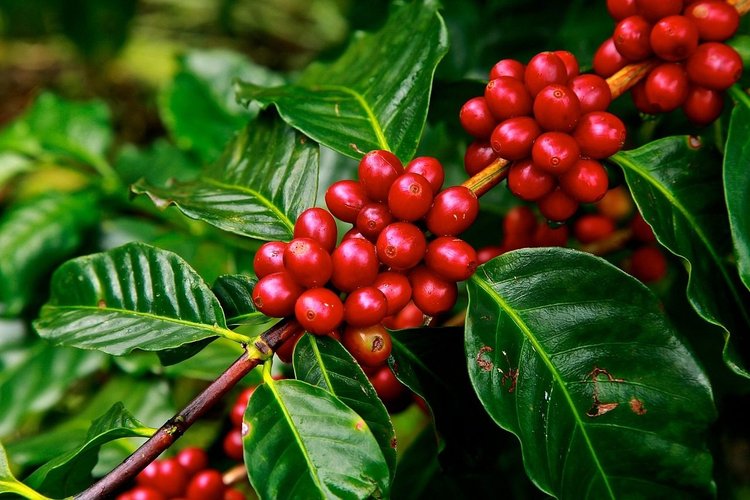

Rwanda’s coffee sector continues to stand out as a strong pillar of agricultural growth, export earnings, and rural transformation, reflecting the country’s steady progress in value-added agriculture and deeper integration into global markets.
Coffee is a key pillar of Rwanda’s economy, contributing strong foreign exchange earnings and supporting rural development. It provides livelihoods for around 400,000 smallholder farmers and is mainly based on high-quality Bourbon Arabica varieties introduced in the early 1900s.
Annual production ranges between 267,000 and 420,000 bags per year, grown on about 42,000 hectares across suitable low-altitude regions, reinforcing its steady role in national growth and export performance according to the NAEB report.
Rwanda produces high-quality Arabica coffee grown in high-altitude regions, giving it a distinctive flavor profile that is widely appreciated in international specialty markets for its smooth body, floral notes, and balanced acidity. The sector supports hundreds of thousands of smallholder farmers, most of whom are organized into cooperatives that enhance quality control, improve access to finance, and expand market opportunities.
Moreover, ongoing reforms in agricultural extension services, cooperative development, and trade partnerships have boosted productivity and improved farmer incomes. At the same time, Rwanda’s strategic focus on branding and specialty marketing has elevated its coffee into a premium global product, opening new markets and increasing export value.
In a strong performance for the sector, Rwanda’s coffee industry reached a historic milestone in 2025, with export revenues of nearly $150 million, the highest level ever recorded. This success reflects rising global demand, improved production systems, and expanding market access.
Furthermore, in 2025, Rwanda exported about 23,860 tonnes of green coffee, generating approximately $148.6 million (about Rwf216 billion). This was a strong increase over 2024, when exports stood at about 17,142 tonnes, valued at around $89.8 million. The growth was further strengthened by a rise in the average export price to about $6.2 per kilogram, improving overall revenue performance.
NAEB showcases that this growth was driven by long-term investments in coffee seedlings, improved farming practices, fertilizer use, and favorable weather conditions. Farmers also benefited from attractive prices, encouraging greater investment in farm care and productivity improvements.
In addition, Rwanda successfully expanded its export destinations, strengthening its presence in emerging markets such as the Middle East while maintaining strong demand in Europe and North America. Promotional efforts such as the Best of Rwanda Coffee Competition helped showcase Rwanda’s premium quality and attract new international buyers.
Although export volumes remained similar to previous peak years, 2025 stands out as the most successful year on record in terms of earnings, highlighting Rwanda’s growing competitiveness in high-value coffee markets. Farmers also benefited directly from improved prices, earning higher returns for coffee cherries, well above the official baseline price.

Rwanda’s coffee industry continues to show strong resilience and steady growth, reinforcing the country’s reputation as a rising global leader in premium agricultural exports.