
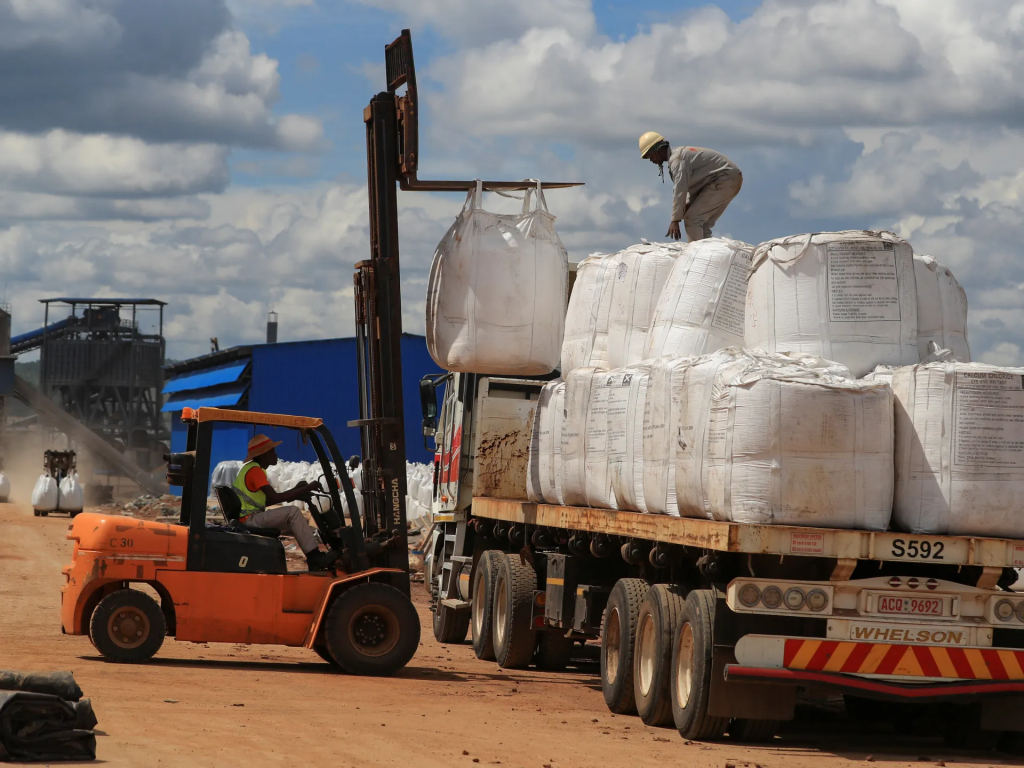

Zimbabwe’s mining industry is entering a period of accelerated growth, with forecasts suggesting that mineral exports could climb to around $21 billion within the next two years. The outlook is being driven by rising global demand for strategic resources and a wave of new investment flowing into the country’s key mineral sectors.
The expansion is expected to have a strong impact on employment, with the industry projected to generate up to 100,000 new jobs over the next five years. This marks one of the most significant hiring waves in recent years for the mining sector, reinforcing its role as a central pillar of national development and economic stability.
Key minerals driving this growth include lithium, gold, platinum, and chrome, resources that are increasingly essential in the global shift toward clean energy technologies, electric vehicles, and advanced industrial manufacturing. Investors are showing growing confidence in Zimbabwe’s mineral potential, with both local and international companies expanding exploration and production activities.
According to industry projections cited through the Chamber of Mines of Zimbabwe, nearly half of the new employment opportunities will require skilled professionals such as engineers, geologists, and technical specialists. This reflects a broader transformation of the sector, which is steadily shifting from traditional extraction methods toward more modern, technology-driven mining operations.
Around 60,000 workers are currently employed in the formal mining sector. Nevertheless, the development of new projects alongside the scaling up of existing mines is likely to drive substantial job growth, with employment numbers expected to more than double in the coming period as BI Africa reports.
Mining remains one of the strongest contributors to the economy of Zimbabwe. It accounts for approximately 14.5% of GDP, generates an estimated $7.7 billion in annual output, and provides more than 45% of the country’s foreign currency earnings. The sector’s influence extends across major urban and industrial centers, including Harare, which continues to play a key role in economic coordination and investment activity.
Economic analysts say this momentum is closely aligned with Zimbabwe Vision 2030, a long-term development framework aimed at transforming the country into an upper-middle-income economy through industrialisation, beneficiation, and value addition.
Experts also highlight that Zimbabwe’s mining sector is benefiting from a broader global shift in demand for critical minerals. As countries and industries transition toward greener technologies, Zimbabwe’s mineral reserves are becoming increasingly valuable in international supply chains.
Reserve Bank of Zimbabwe economist Persistence Gwanyanya noted that the ongoing investment cycle reflects strong confidence in the country’s mining future, with both domestic and foreign investors positioning themselves for long-term returns.
Beyond revenue generation, the expected mining expansion is also seen as a key opportunity for job creation, skills development, and industrial growth. The rising demand for technical expertise is expected to encourage greater investment in training, education, and research within the sector.
As new projects come online and production increases, Zimbabwe’s mining industry is evolving into a more diversified and technologically advanced sector. This shift is expected to strengthen its contribution not only to exports and foreign exchange earnings but also to broader economic transformation and sustainable development.
The sector’s projected growth signals a strategic turning point, positioning Zimbabwe more firmly within global mineral value chains while unlocking new opportunities for employment and long-term economic resilience.


