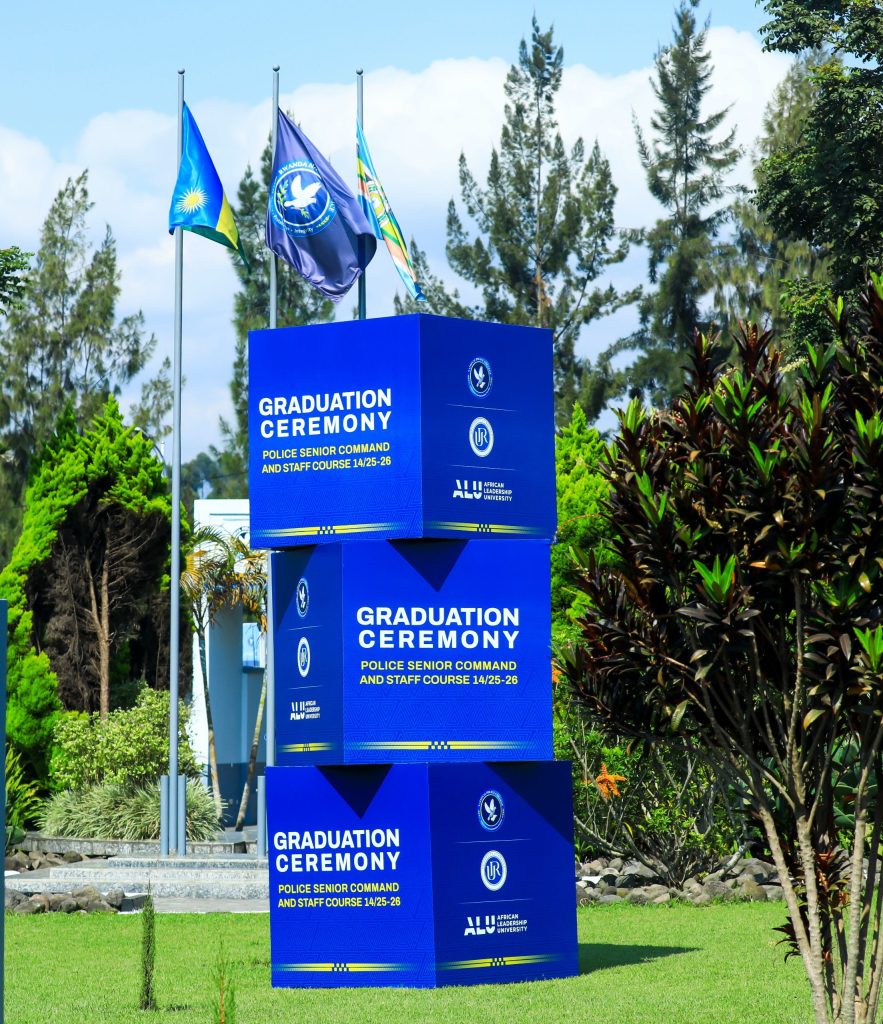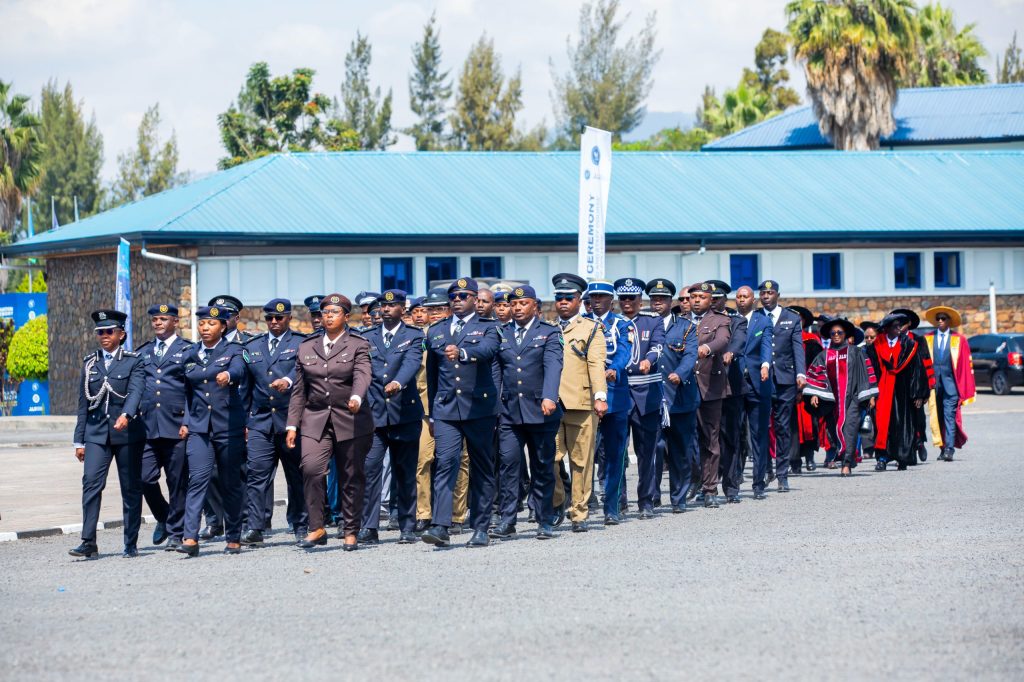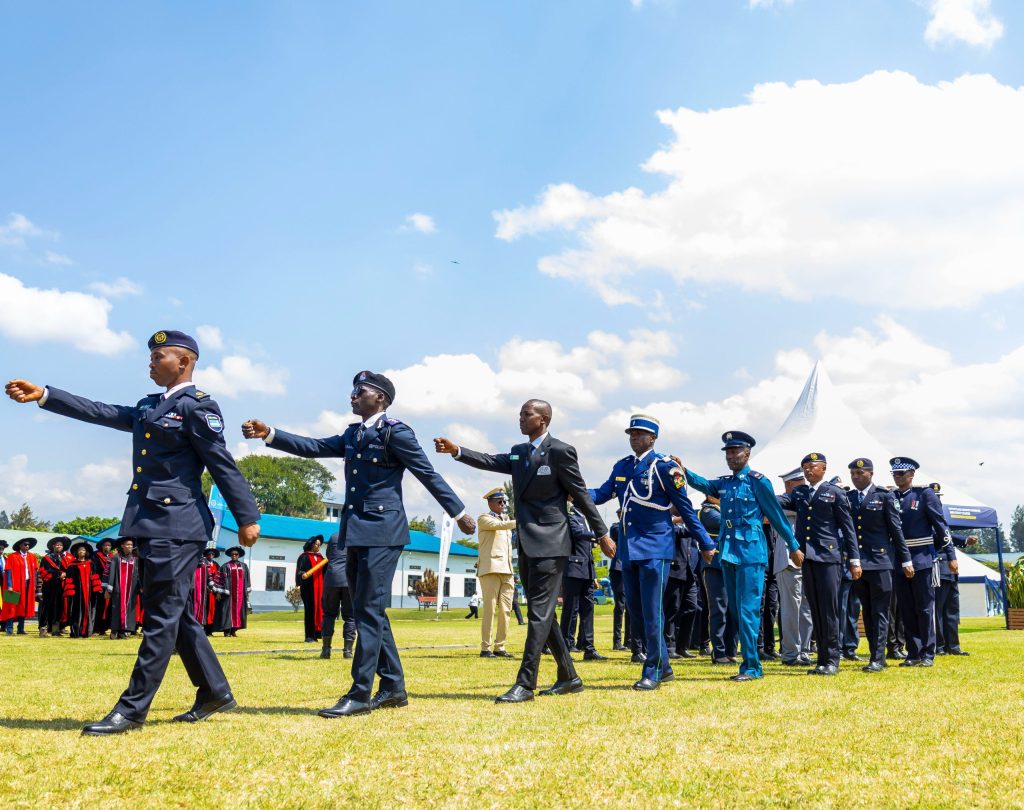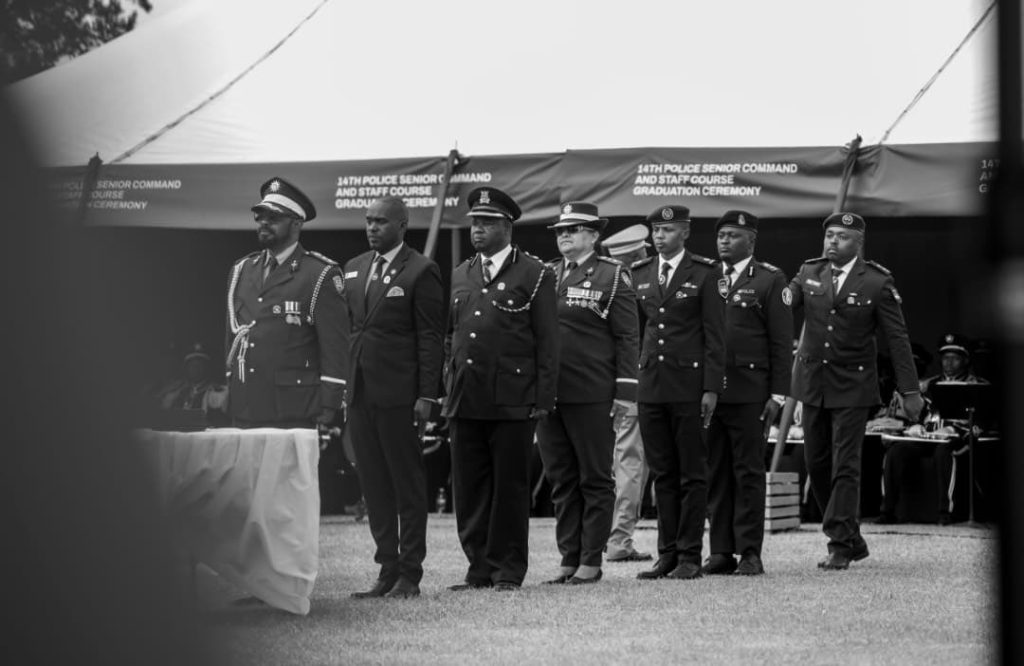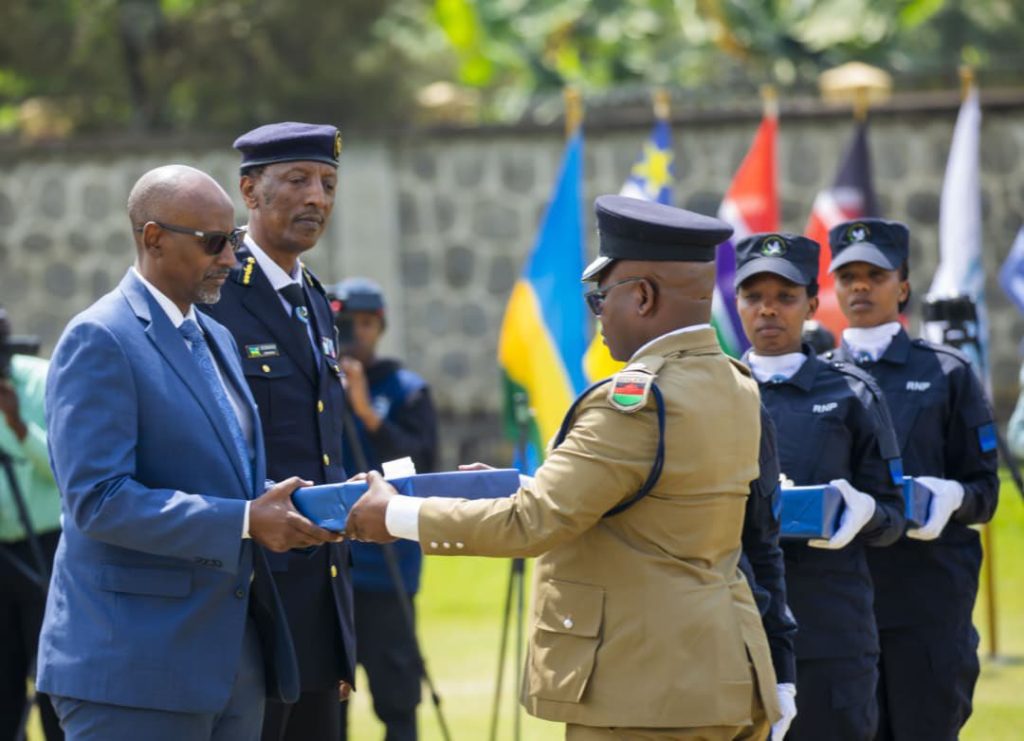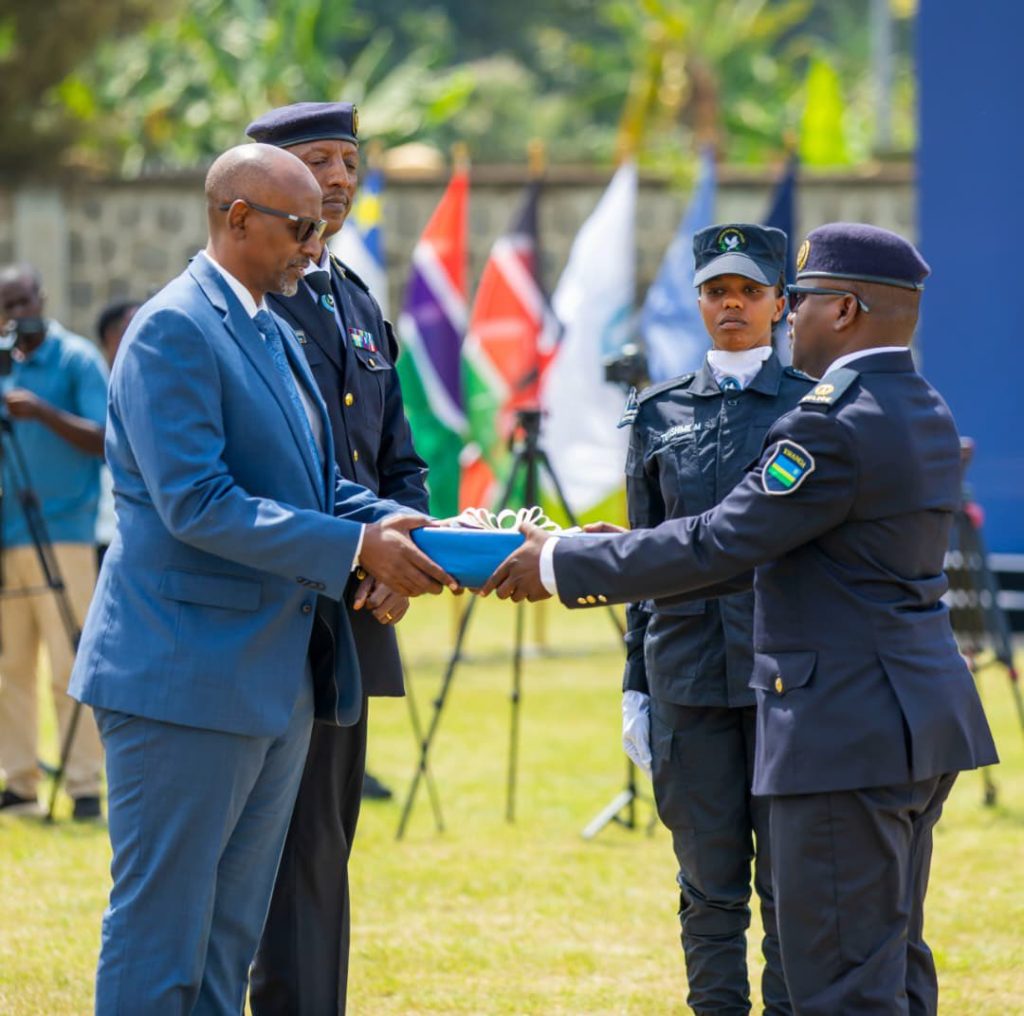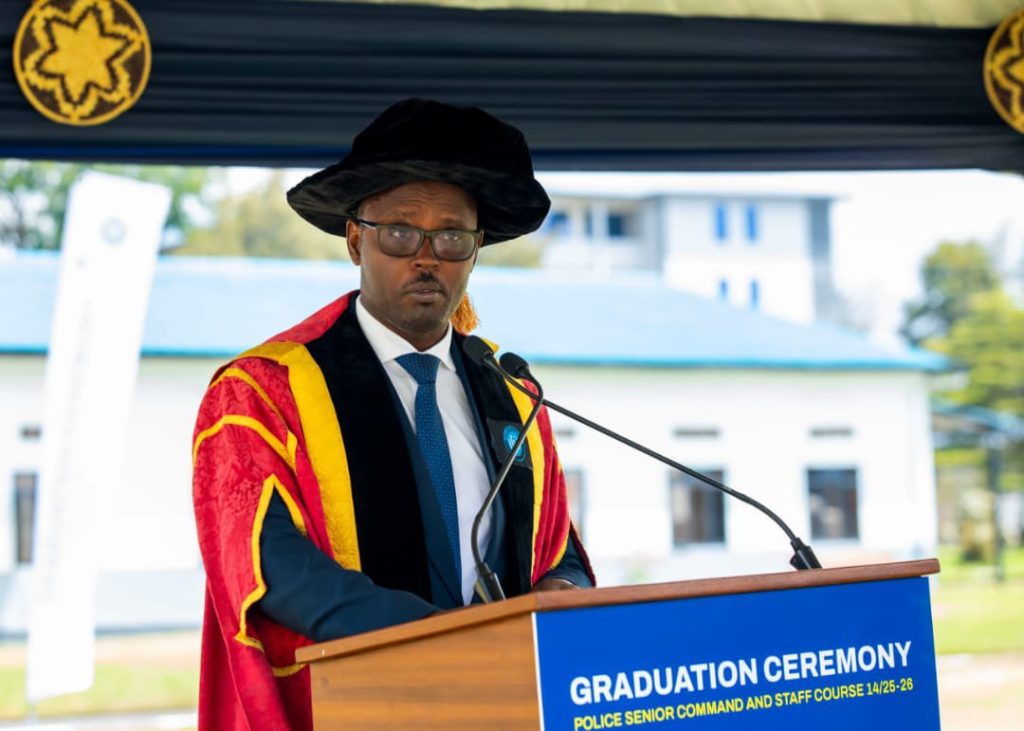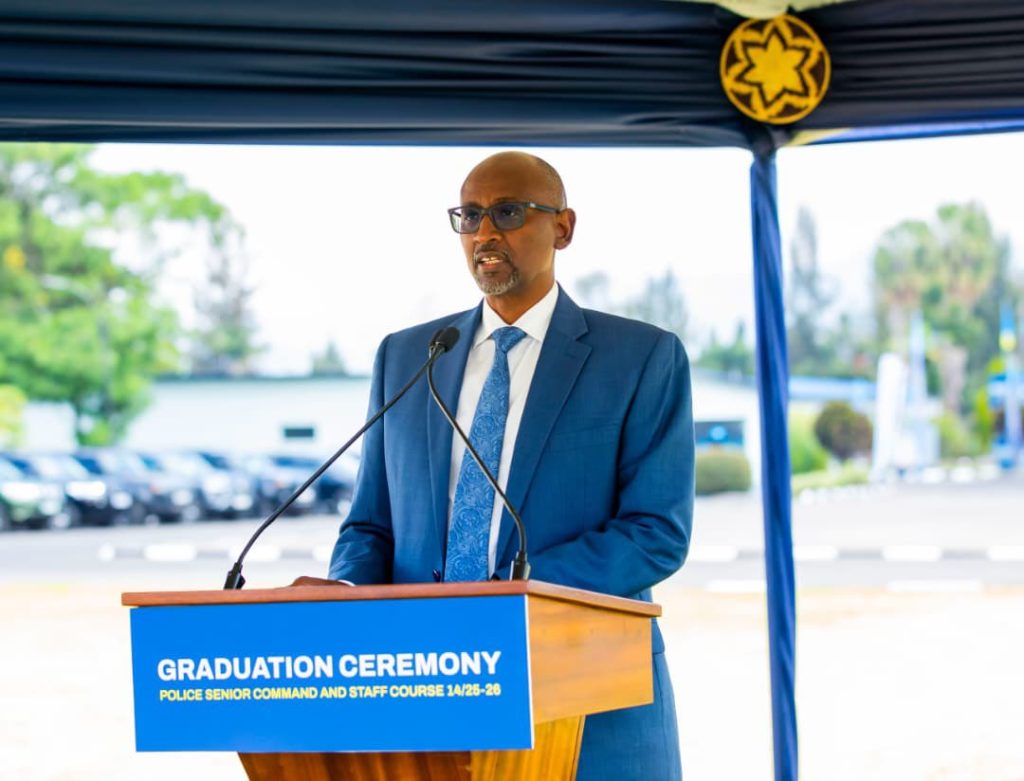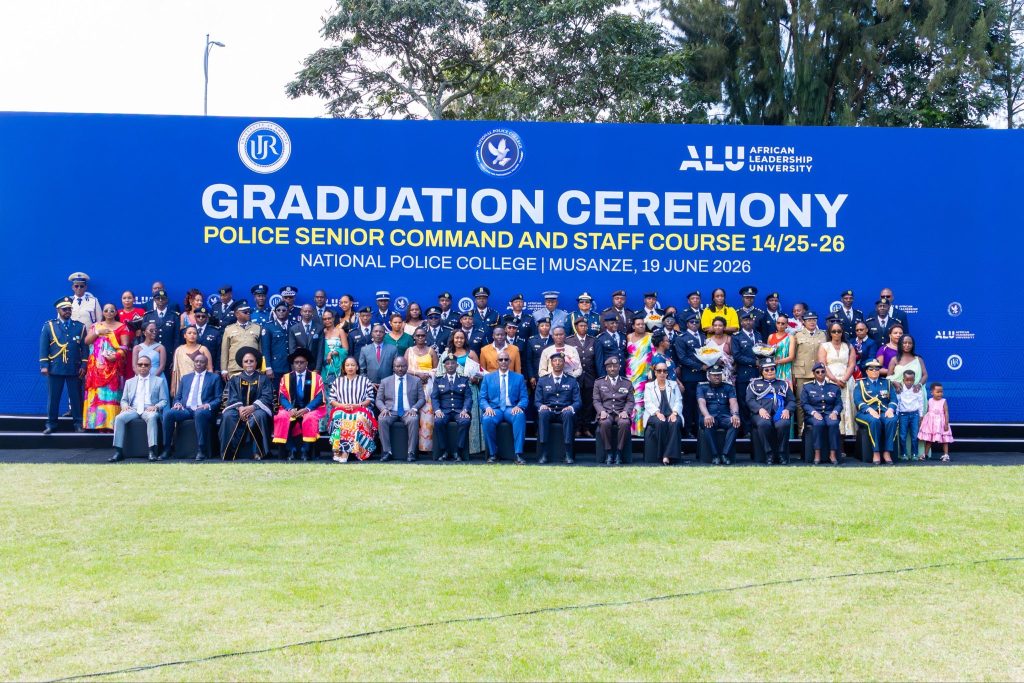

Speaking during the graduation ceremony, the Commandant of the National Police College, CP Christophe Bizimana, said the training was conducted in partnership with the University of Rwanda and the African Leadership University (ALU).
The program combined courses in police leadership, governance modules offered by ALU and postgraduate studies in security and strategic management.
Bizimana urged the graduates to uphold professionalism and put into practice the knowledge they acquired during the course.
“As you return to your duties, it is important to remember that you must perform your responsibilities in the right way and with professionalism. You have gained knowledge, and it should be reflected in your actions and conduct,” he said.
He added that the officers have a responsibility to drive change in their daily work, noting that even small improvements can have a meaningful impact.
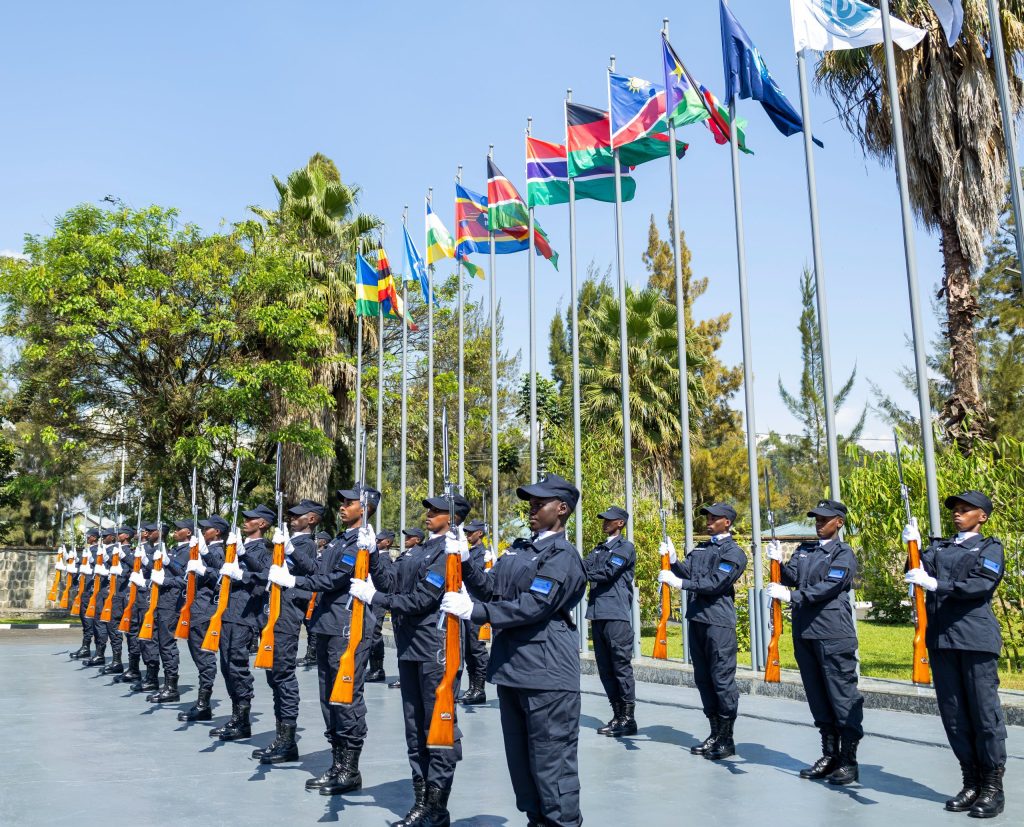
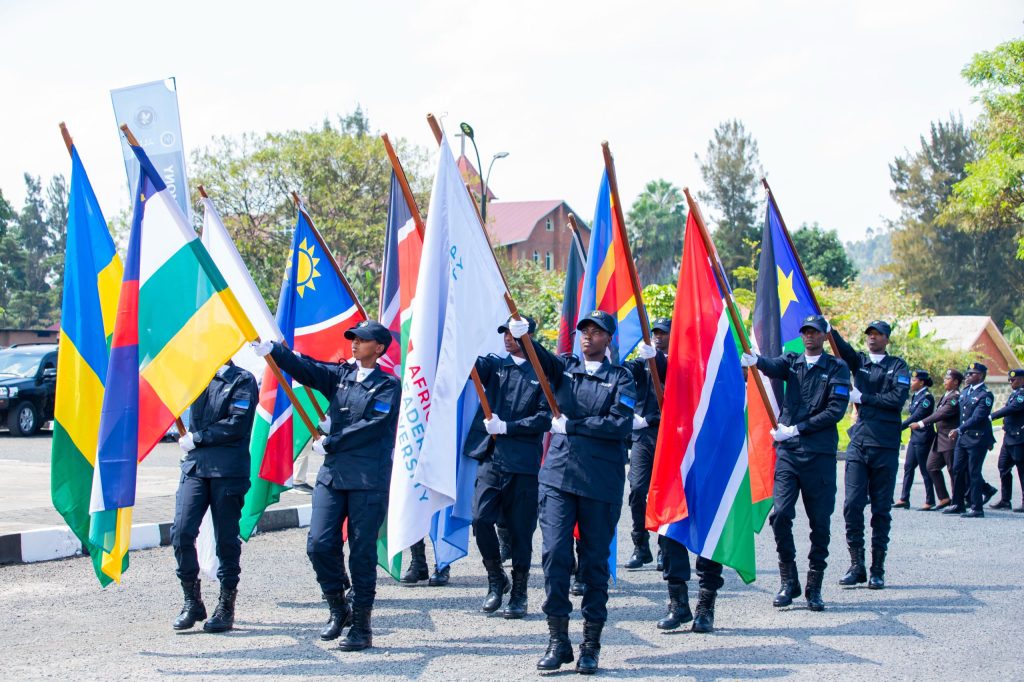
The graduating class brought together officers from 10 countries. Besides Rwanda, participants included officers from the Central African Republic, Eswatini, Kenya, Malawi, Namibia, South Sudan, Somalia, The Gambia and Uganda.
During the ceremony, four outstanding students were recognized for their academic achievements. SSP Rashida Mugawe of Uganda received an award for producing the best research paper, while SP Chisomo Lucius Ziwawo of Malawi finished third overall. SSP Florent Niyongira and SP Fraterne Muhawenimana, both from the Rwanda National Police, took second and first places respectively.
The Vice-Chancellor of the African Leadership University, Sidee Dlamini, said the institution’s partnership with the Rwanda National Police has produced significant results over the past five years and expressed hope that the collaboration would continue.
He emphasized that visionary leadership, sound governance and ethical conduct are essential ingredients for Africa’s development aspirations.
University of Rwanda Vice-Chancellor Assoc. Prof. Kayihura Didas Muganga said the officers had acquired skills that would enable them to provide guidance and leadership at a time when societies are facing increasingly complex security challenges.
“These times require knowledge, resilience and the courage to take responsibility for the decisions you make,” he said, encouraging the graduates to reject the culture of blaming others and instead focus on solving problems.
Rwanda’s Minister of Education, Joseph Nsengimana, described graduation not as the end of learning, but as the beginning of a new stage of continuous development.
“As security challenges evolve rapidly, leaders in the sector must also evolve. New threats emerge every day, technology continues to advance, criminals are adapting, and societies are changing. Leaders must therefore continue learning and keep pace with these developments,” he said.
Nsengimana stressed that success in the security sector rests on three pillars: character, skills and knowledge. While knowledge helps leaders understand challenges and skills enable them to address them effectively, he said, good character ultimately determines how they lead and serve as role models.
He further noted that addressing modern security threats requires stronger international cooperation, collaboration among institutions and effective leadership.
Among the graduates were 17 officers from the Rwanda National Police, as well as two officials each from the Rwanda Investigation Bureau (RIB), the Rwanda Correctional Service (RCS) and the National Intelligence and Security Service (NISS), reflecting Rwanda’s emphasis on strengthening leadership and professionalism across its security institutions.
Courtesy of IGIHE