
A group of students studying technology abroad have launched a center that provides training and consultancy in internet security, commonly known as cybersecurity, with the goal of training more than one million people by 2030.
The CEO of ICCA, Niyodusenga Petero, explained that the idea was born when he and his colleagues were teaching fellow students about cybersecurity while studying in the United States. They realized that this knowledge should also be brought to Africa.
“Africa is a continent experiencing rapid growth, especially in technology. For example, in Rwanda, NST1 focused on infrastructure development, while NST2 emphasizes integrating technology across all sectors, including government services, private businesses, and public service delivery. All of this requires strong security and skilled professionals to protect it,” he said.
Rwanda has set a target that by 2029, millions of people mainly youth, will have received training in coding, while 500,000 others will have undergone advanced ICT training.
An official from the Ministry of ICT and Innovation, Grace Niwemukiza, noted that such goals cannot be achieved without collaboration between the public and private sectors.
“Even when a country sets ambitious targets, they cannot be achieved by the government alone. We need cooperation between public institutions, private sector players, and organizations like this one so that we can collectively achieve our goals,” she said.
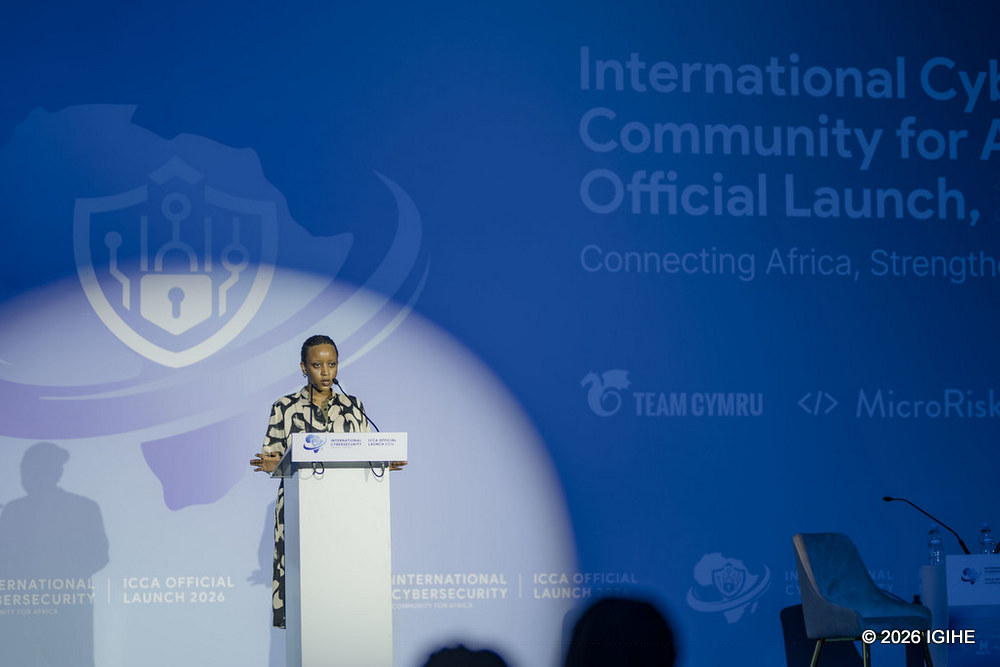
The center will train students studying technology, individuals, tech entrepreneurs, employees in organizations needing cybersecurity skills, and others.
A student at Carnegie Mellon University Africa, Aklile Mamo, said the initiative will help them gain practical skills beyond classroom learning.
“Studying cybersecurity is important, but classroom lessons alone are not enough. You need to apply what you learn in real-life situations. These are people who work in the field daily, and they will help us better understand our studies,” he said.
ICCA plans to expand its activities across Africa, including countries such as Gabon, Republic of the Congo, Kenya, Ethiopia, and others.