
Egypt has officially launched an ambitious large-scale agricultural initiative known as the New Delta project, a massive desert reclamation program designed to boost food production, strengthen economic resilience, and generate more than two million jobs across the country.
The project, spearheaded under the leadership of President Abdel Fattah el-Sisi, represents one of the most extensive land development efforts in Egypt’s modern history. It focuses on transforming vast stretches of desert west of the Nile Delta into productive agricultural land, marking a strategic shift toward food self-sufficiency and reduced reliance on imports.
At the heart of the initiative is the goal of reclaiming approximately 2.2 million feddans of desert land, an expansion that is expected to increase Egypt’s cultivated land area by nearly 15 percent once fully completed.
The newly developed farmland will be used to grow essential crops such as wheat and maize, alongside high-value agricultural products, including vegetables, olives, and figs, aimed at both domestic consumption and export markets.
Officials say the project is designed not only to improve food security but also to strengthen Egypt’s position in global agricultural trade.
Massive Investment in Infrastructure
The New Delta project has already attracted investments estimated at around $15 billion, equivalent to roughly 800 billion Egyptian pounds, according to government figures.
This funding has been directed toward building essential infrastructure, including grain storage facilities, industrial zones, road networks, and logistics systems that will connect newly reclaimed farmland with major urban centers, the Nile Valley, and key export ports.
The scale of construction is intended to support long-term agricultural production while also creating a foundation for agro-industrial development in the region.
Advanced Irrigation System at the Core
A defining feature of the project is its advanced and highly engineered irrigation system, which aims to supply water to newly developed desert farmland through a complex network of canals and pumping stations.
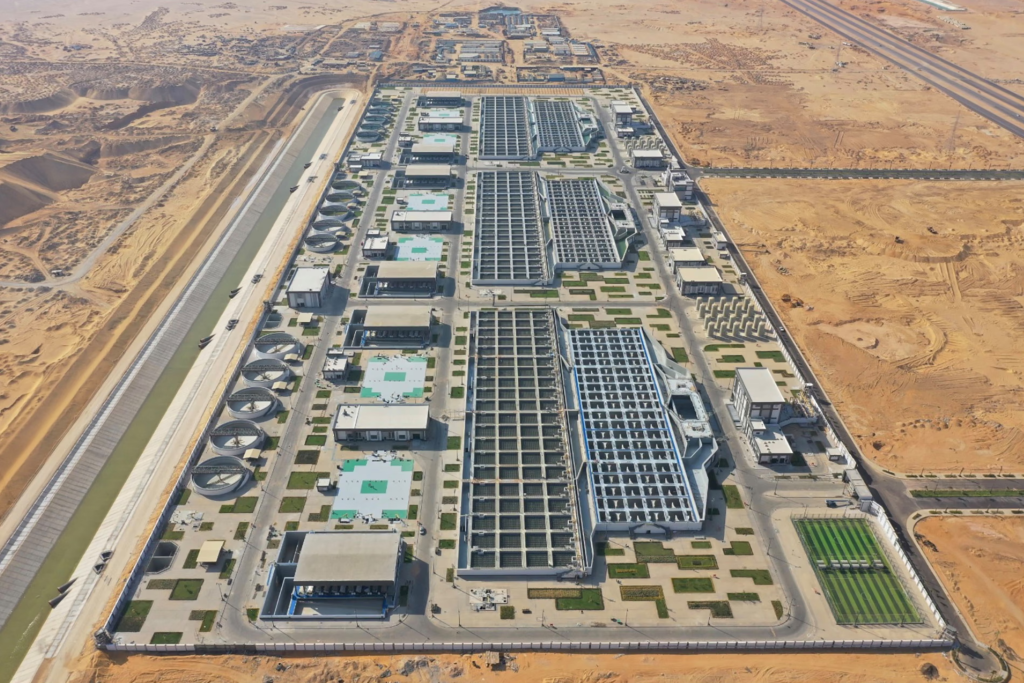
Agricultural drainage water from the western Nile Delta is treated at the El Hammam facility located along the Mediterranean coast. This facility is capable of processing up to 7.5 million cubic meters of water daily, which is then transported through a 170-kilometer canal system supported by multiple pumping stations.
The system lifts water from lower drainage areas to higher desert elevations, enabling large-scale farming in previously arid regions. A second phase of the irrigation network is also planned to further increase water capacity and expand agricultural reach.
Economic and Social Impact
Beyond agriculture, the New Delta initiative is expected to serve as a major driver of employment, with projections indicating the creation of more than two million jobs across farming, logistics, construction, and agro-processing sectors.
Government officials have presented the project as a strategic response to global economic pressures, including disruptions caused by the COVID-19 pandemic and international conflicts that have affected global food supply chains.
By increasing domestic production of staple crops and reducing import dependency, Egypt aims to ease pressure on foreign currency reserves while strengthening national food security.
The New Delta project represents a major step in modernizing agriculture in Egypt through large-scale land reclamation, advanced irrigation systems, and infrastructure development, aiming to boost food production, strengthen the economy, and enhance the country’s role as a regional agricultural leader.
As implementation progresses, the New Delta project stands as a bold attempt to convert desert land into a productive economic engine. If successful, it could redefine Egypt’s agricultural capacity, stimulate rural development, and position the country as a stronger player in global food markets.
For now, the initiative symbolizes a forward-looking strategy aimed at balancing innovation, resource management, and economic growth in one of the world’s most water-sensitive environments.