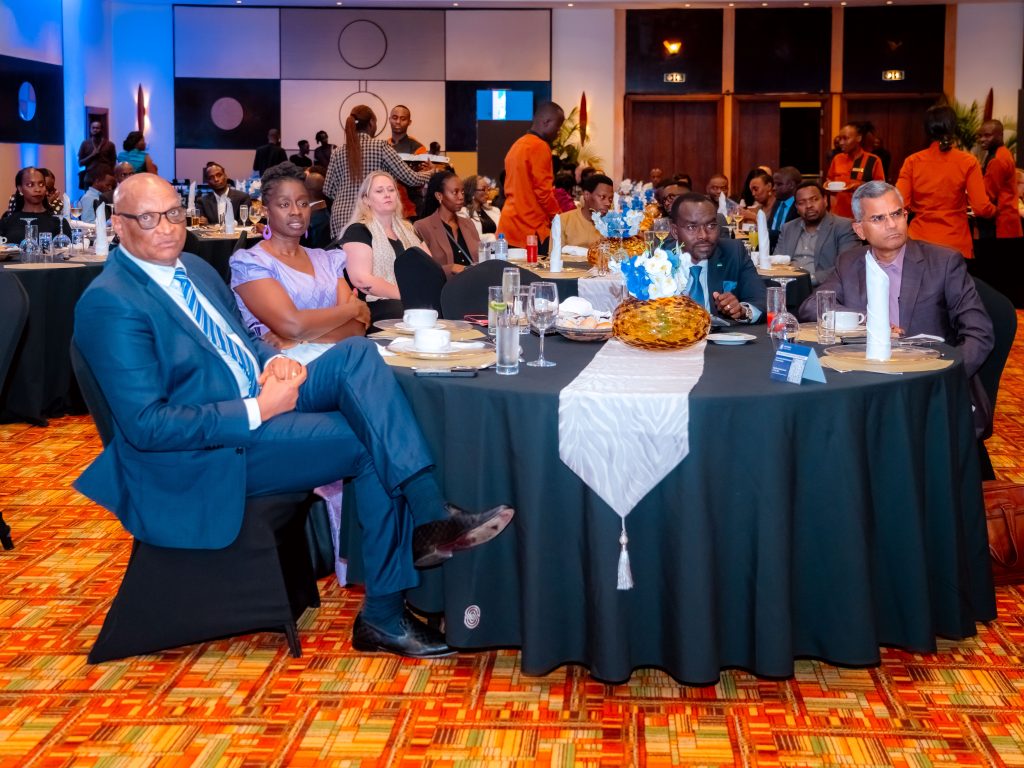
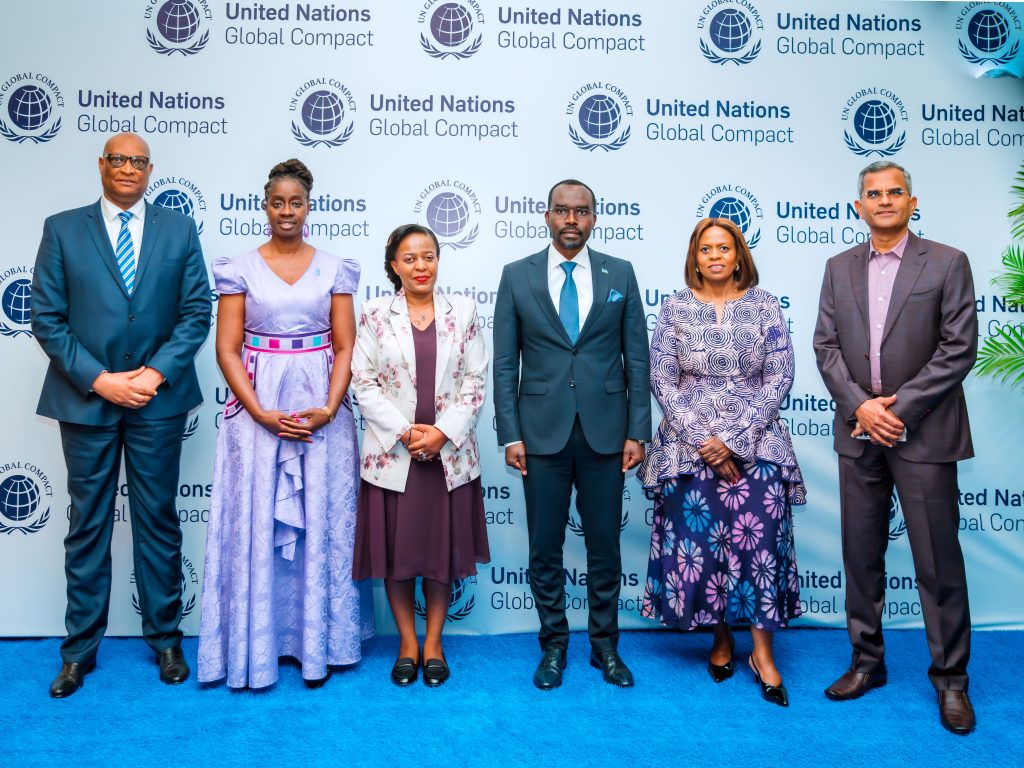

The launch, held on May 15 at Kigali Serena Hotel on the sidelines of the Africa CEO Forum 2026, brought together senior government officials, United Nations leaders, executives from leading companies, Development Partners, and sustainability advocates for what speakers described as the beginning of a new era of responsible business leadership in Rwanda.
Speaking as the guest of honor, Honorable Prudence Sebahizi, Minister of Trade and Industry, underscored the private sector’s central role in driving Rwanda’s sustainable and inclusive economic transformation.
“Tonight is not simply the launch of a network. It is the beginning of a stronger movement for responsible business leadership in Rwanda — a movement that demonstrates that economic growth and sustainability can go hand in hand.” Said Minister Prudence.
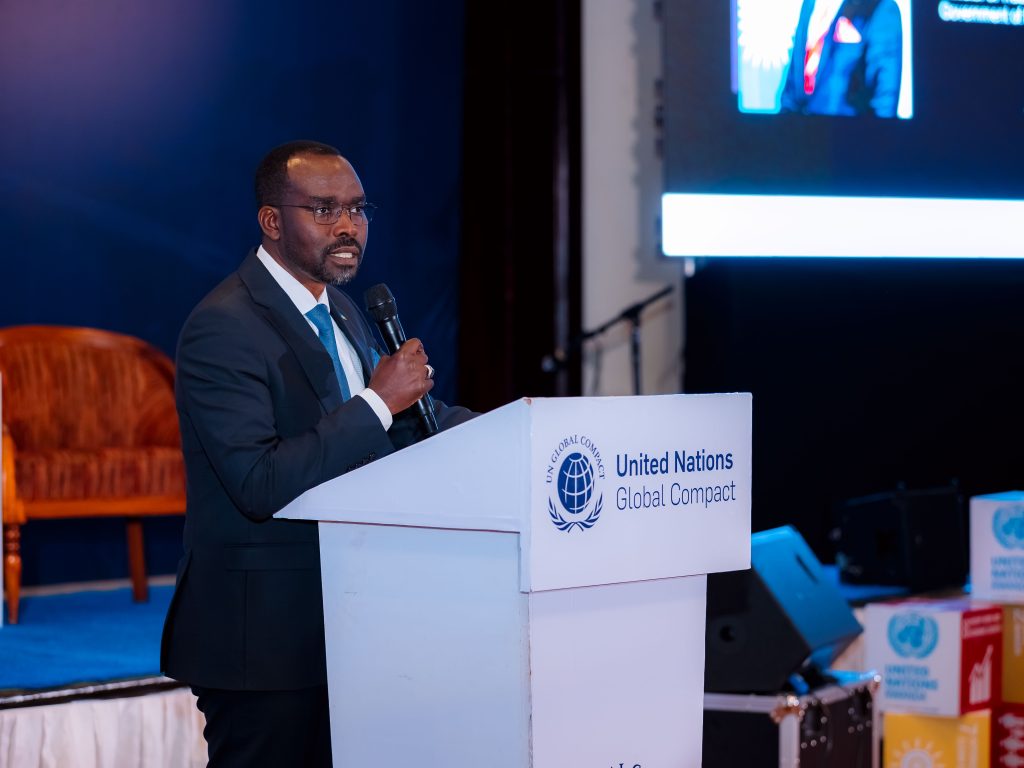
He added, “Growth alone is not enough. Growth must be sustainable, responsible, and inclusive. This is where the UN Global Compact becomes highly relevant.”
The Rwanda Network joins the world’s largest corporate sustainability initiative, which today includes more than 23,000 companies in over 160 countries and more than 65 country networks worldwide. Established in 2000, the UN Global Compact encourages businesses to align their operations with ten universal principles on human rights, labour, environment, and anti-corruption while advancing the Sustainable Development Goals (SDGs).
For Rwanda, officials said the launch represents more than the creation of a new institution. It signals a growing recognition that the private sector must play a central role in addressing development challenges, driving innovation, and building a resilient economy.
Opening the ceremony, the acting UN Resident Coordinator in Rwanda, Ms. Fatmata Lovetta Sesay, said the launch reflects Rwanda’s growing commitment to sustainable, inclusive, and principled business practices.
“Tonight marks a significant milestone for Rwanda’s private sector and for our collective efforts to advance sustainable development through responsible business leadership,” she said.
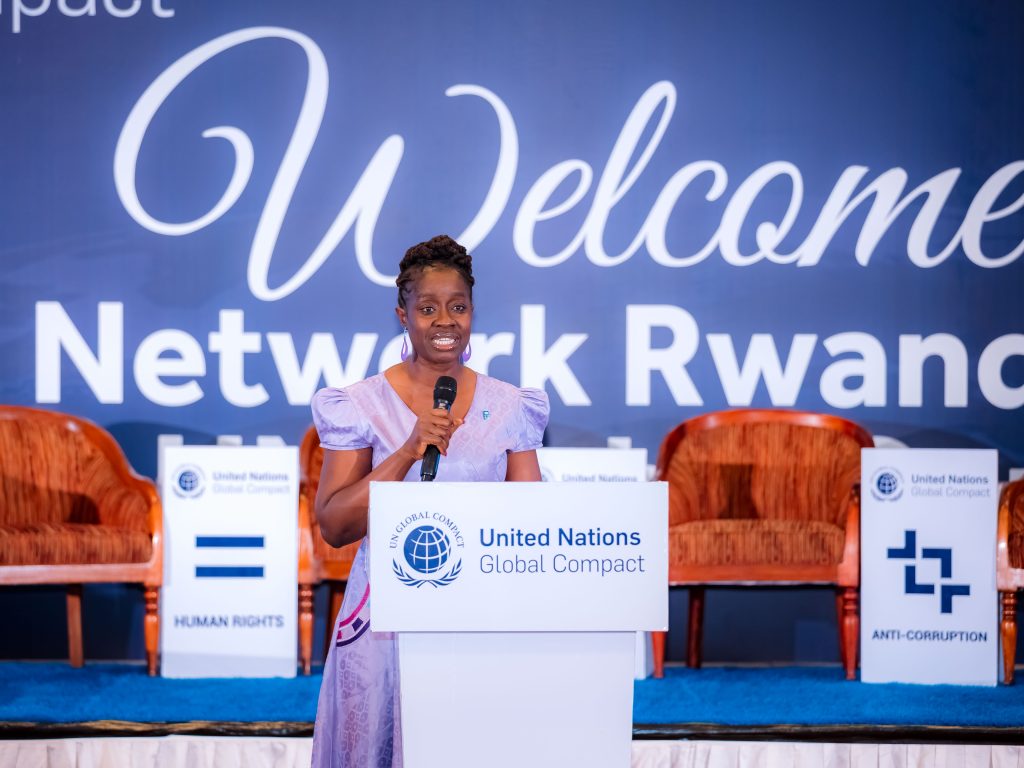
She noted that since 2023, the United Nations in Rwanda, working closely with businesses and partners, has supported efforts to establish the country network and mobilize companies around sustainability and responsible corporate governance. Nearly 40 companies have already joined the movement.
The launch comes as Rwanda pursues ambitious economic targets under the second National Strategy for Transformation (NST2), which seeks to accelerate industrialization, export growth, innovation, and job creation through stronger private sector leadership.
According to the UN Resident Coordinator a.i., Rwanda aims to sustain average economic growth of 9.3 percent by 2029. The country already recorded 9.4 percent GDP growth in 2025, reinforcing its position among Africa’s fastest-growing economies. She said Rwanda plans to double exports from approximately $3.5 billion to $7.3 billion by 2029, mobilize private investment equivalent to more than 21.5 percent of GDP, and create 1.25 million decent jobs within five years.
“This is not growth by chance,” she said. “It is driven by a deliberate shift from a factor-driven economy toward a productivity and investment-driven model centered on industrialization, quality services, export diversification and innovation.”
Assistant Secretary-General and CEO of the UN Global Compact, Sanda Ojiambo, described Rwanda as one of Africa’s most promising centres for sustainable investment and innovation.
“As one of Africa’s fastest-growing economies and a regional hub for innovation, technology, and finance, Rwanda is poised to drive resilient growth across the region,” she said.
Ojiambo praised Rwanda’s investments in digitalization, infrastructure, and homegrown solutions, saying they demonstrate how long-term investments can strengthen both communities and businesses. She also linked Rwanda’s economic direction to broader continental ambitions discussed during the Africa CEO Forum, particularly the push for stronger intra-African trade and shared economic ownership.
“This concept of multi-stakeholder cooperation across sectors and industries is at the heart of our work at the UN Global Compact,” she said.
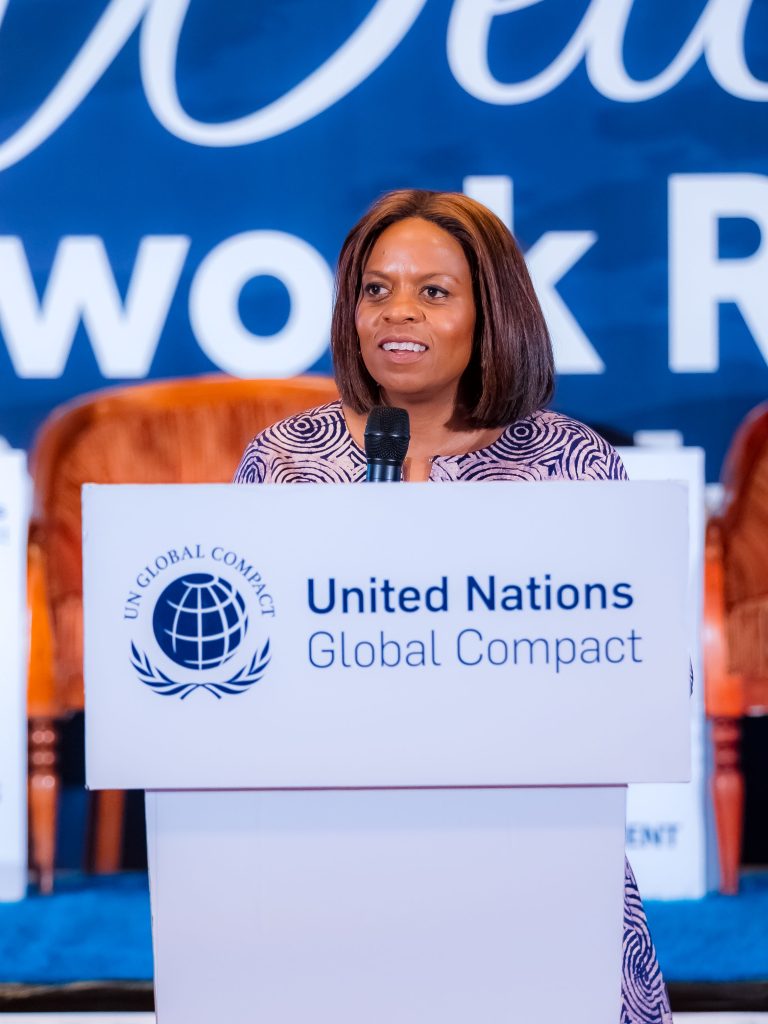
Ojiambo noted that the Rwanda Network now joins a growing African movement of UN Global Compact country networks across nations, including Kenya, Nigeria, South Africa, Egypt, and Angola, etc. She emphasized that sustainability is increasingly becoming a strategic business imperative rather than simply a corporate social responsibility agenda.
“According to our recent CEO Study, 88 percent of CEOs say that the business case for sustainability is stronger today than five years ago, while 99 percent are planning to maintain or expand their sustainability commitments despite global headwinds,” she said.
The UN Global Compact’s new 2026–2030 strategy focuses on equipping companies with sustainability tools, catalyzing collective action, and strengthening the business case for sustainable growth. Participating companies in Rwanda will gain access to global sustainability programmes, including climate and gender equality accelerators, sustainable supply chain initiatives, SDG innovation programmes, and training through the UN Global Compact Academy.
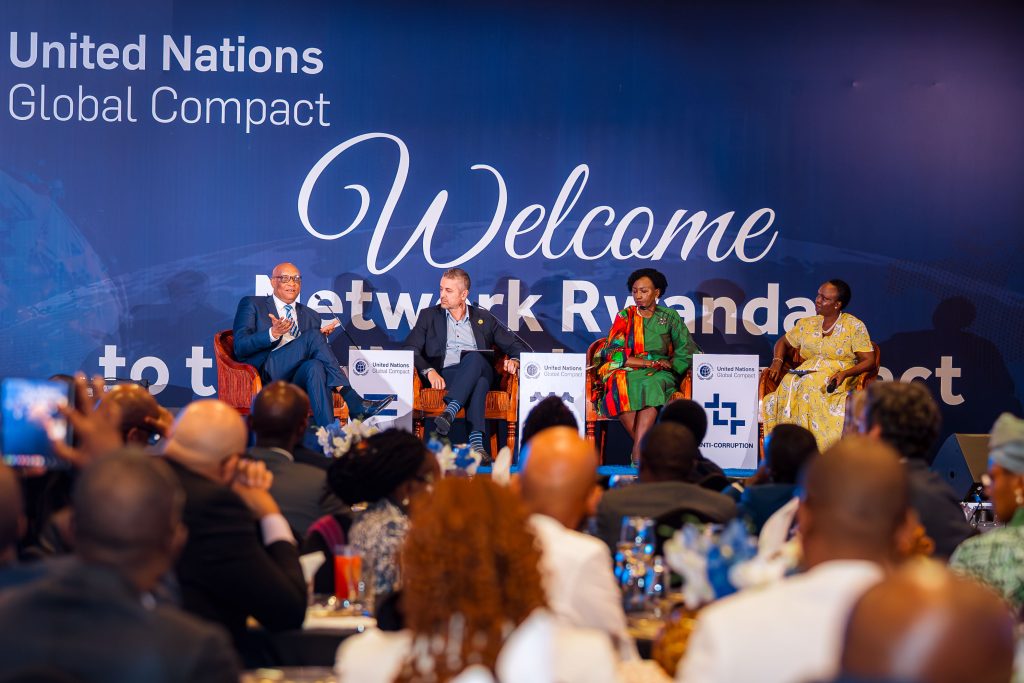
The newly launched Rwanda Network will also focus on local priorities through policy dialogue, capacity building, and partnerships tailored to Rwanda’s development ambitions.
Speaking on behalf of the Network’s inaugural Board, the Board Chair, Mr. Ramesh Moochikal, who is also the Chief Executive Officer of Africa Improved Foods, said the initiative creates a platform for companies to contribute meaningfully to social progress, environmental stewardship, and ethical governance while remaining competitive.
“Businesses are increasingly expected not only to generate economic value but also to make meaningful contributions to social progress, environmental stewardship, ethical governance, and resilience,” he said.
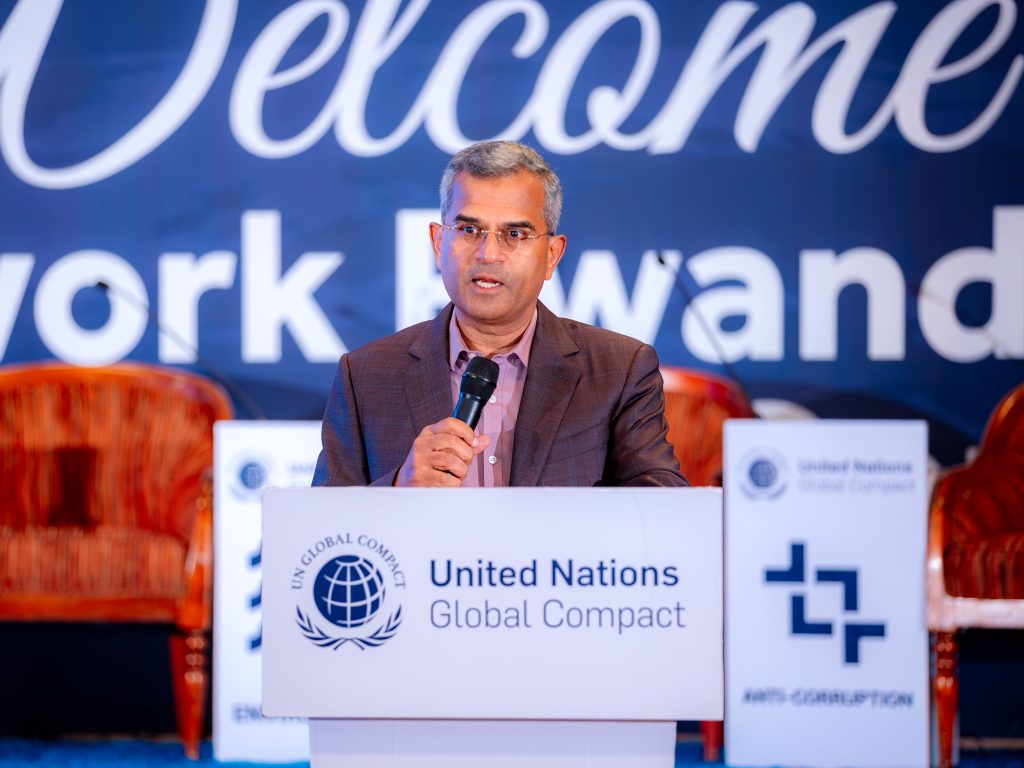
The Board Chair outlined a two-year strategic roadmap centered on expanding membership, strengthening institutional capacity, and promoting collective action around the SDGs. The Network aims to grow to more than 100 participating companies across sectors, including large corporations, SMEs, youth-led enterprises, and women-led businesses.
“Our objective is clear: to build a Network that is practical, action-oriented, inclusive, and impactful — a Network that creates value for companies while contributing to Rwanda’s national development priorities and the Sustainable Development Goals,” he said.
Among the key focus areas identified are youth employment, entrepreneurship, climate action, gender equality, digitalization, responsible supply chains, and inclusive economic growth. Officials stressed that partnerships will be critical to the Network’s success, with collaboration expected between businesses, government institutions, academia, development partners, civil society, and international platforms.
The launch ceremony featured fireside discussions with business leaders who shared their experiences implementing sustainability principles in Rwanda, alongside the official introduction of the Network’s inaugural Board Members and Executive Director.
Throughout the evening, speakers repeatedly emphasized that the Network’s success would depend on collective leadership and the willingness of businesses to move beyond profit-driven models toward long-term sustainable growth.
“In a world marked by uncertainty and complex challenges, governments alone cannot achieve the Sustainable Development Goals,” the UN Resident Coordinator a.i. said. “The private sector must play a central role in driving solutions.”
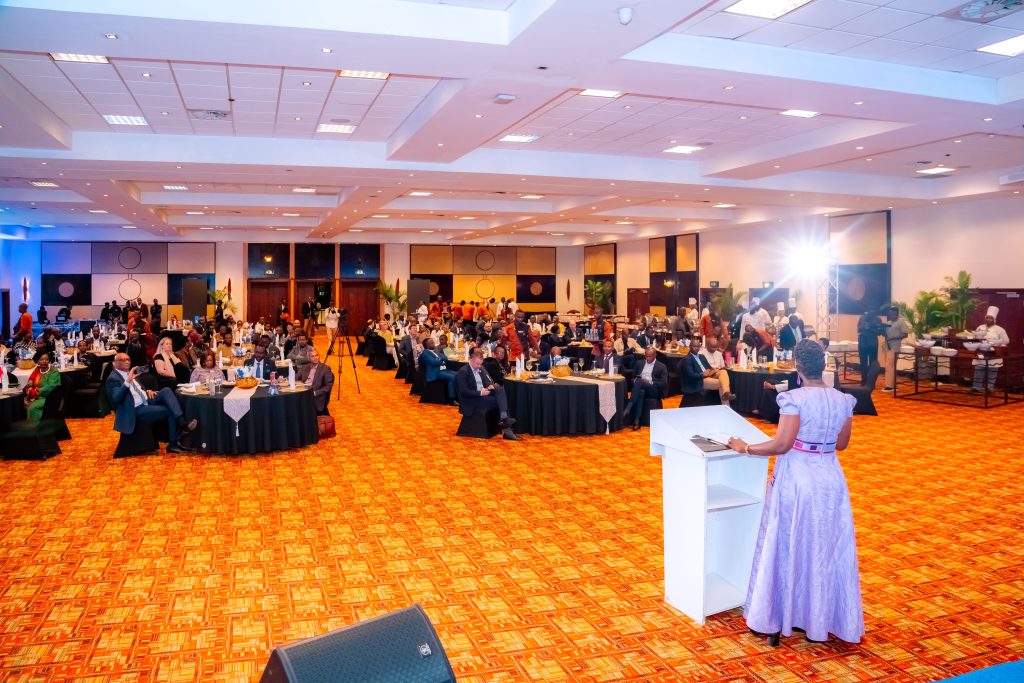
The Assistant Secretary General Ms Ojiambo echoed that message, calling on businesses to view current global crises not only as risks, but as opportunities to redesign economies and business models around resilience and sustainability.
“Business has a responsibility and an enormous opportunity to drive positive change in Rwanda and worldwide,” she said. “I invite you all to join us on this journey.”