
Forty Rwandan women and young people have graduated from a China-supported creative arts training programme at Agaseke Centre in Kicukiro District, marking another milestone in efforts to promote economic empowerment, entrepreneurship and sustainable livelihoods through Rwanda–China cooperation.
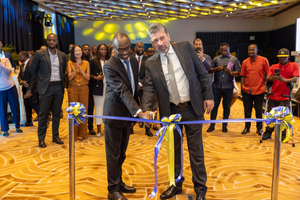
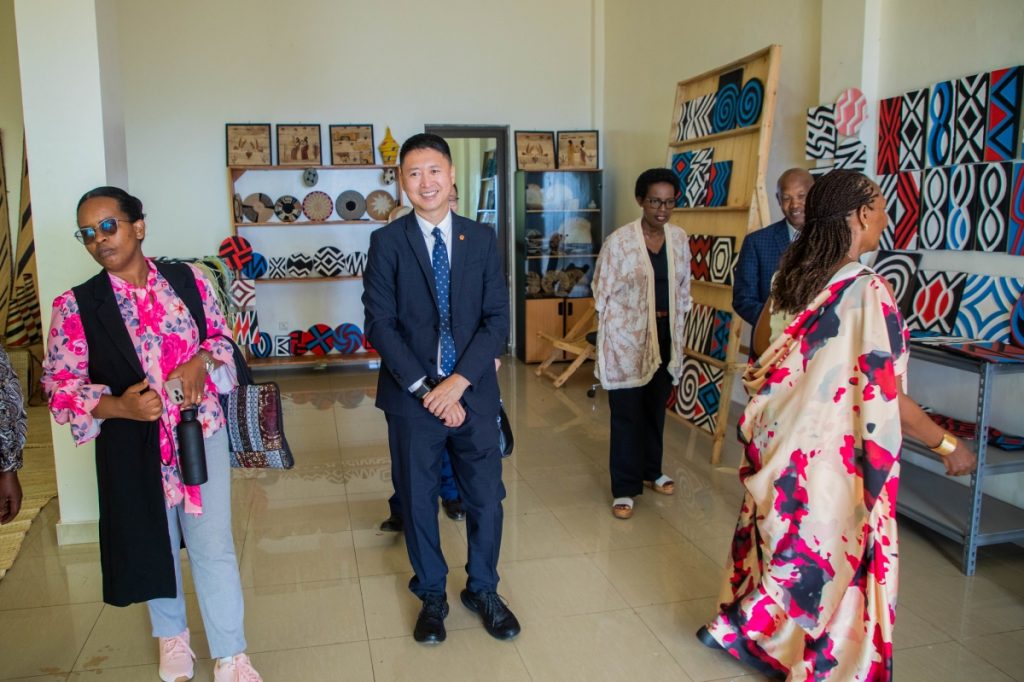
The graduation ceremony, held on Wednesday, October 28, brought together Chinese Ambassador to Rwanda Gao Wenqi, Kigali’s Vice Mayor in Charge of Socio-Economic Affairs, Martine Urujeni, programme beneficiaries and representatives of Agaseke Centre.
Supported by the Chinese government in partnership with the City of Kigali, the initiative equips participants with practical creative arts skills while integrating training on gender equality, reproductive health and women’s rights.
Now in its third year, the programme has reached 125 women and young people, providing them with skills to improve their economic prospects and participate more actively in income-generating activities.
Three years of investing in skills and livelihoods
According to Agaseke Centre Coordinator Bella Rukwavu, the initiative goes beyond classroom training by creating opportunities for graduates to work alongside cooperative members in fulfilling customer orders, allowing them to translate newly acquired skills into income.
Since its inception, the programme has progressively expanded its areas of training.
In 2024, the first cohort of 50 participants received training in financial literacy, e-commerce, marketing and storytelling. Another 35 beneficiaries joined in 2025, focusing on creative arts, gender-based violence awareness and improved weaving techniques.
This year’s programme, conducted between August and October, trained 40 participants, bringing the cumulative number of beneficiaries to 125.
Addressing the graduates, Ambassador Gao Wenqi underscored the programme’s contribution to improving livelihoods, noting that its impact extends beyond individual participants to their families.
“A growing number of trainees are not only learning skills, but also weaving better lives for their families,” he said.
The Ambassador reaffirmed the Chinese Embassy’s commitment to continued collaboration with the City of Kigali and Agaseke Centre to extend similar opportunities to more women and young people.
Vice Mayor Martine Urujeni also highlighted the initiative’s contribution to equipping participants with practical skills that can support sustainable income generation.
From acquiring skills to creating opportunities
For the graduates, the programme represents more than the completion of a training course. It offers a foundation for entrepreneurship, economic independence and the possibility of transferring acquired knowledge to others.
Fabrice Ahishakiye, one of the graduates, described weaving as a skill that requires patience, commitment and consistency. Having completed the programme, he now hopes to establish his own business and encouraged fellow young people to identify practical skills they can develop into economic opportunities.
Another graduate, Divine Masengesho, expressed her ambition to use the knowledge acquired through the programme to help others develop similar capabilities.
Their aspirations reflect the broader objective of the initiative: transforming vocational training into opportunities for self-employment, knowledge-sharing and improved livelihoods.
Connecting Rwandan creativity to international markets
Beyond local skills development, the partnership is also creating opportunities for greater international exposure.
With support from the Chinese Embassy, two representatives of Agaseke Centre are expected to participate in the 2026 China International Import Expo (CIIE) in China next week.
Their participation presents an opportunity to showcase Rwandan craftsmanship, explore international market connections and gain exposure to one of China’s major platforms for global trade and commercial exchange.
The development adds an international dimension to a programme initially centred on local capacity-building, demonstrating how skills development and market access can complement each other.
As Rwanda and China continue to deepen their cooperation, initiatives such as the Agaseke Centre partnership illustrate how international relations can translate into practical opportunities at the community level.
For the 40 new graduates, the immediate priority is to put their skills into practice. For the wider partnership, the programme offers an example of how targeted investments in women, youth and entrepreneurship can contribute to sustainable livelihoods while strengthening people-to-people ties between Rwanda and China.