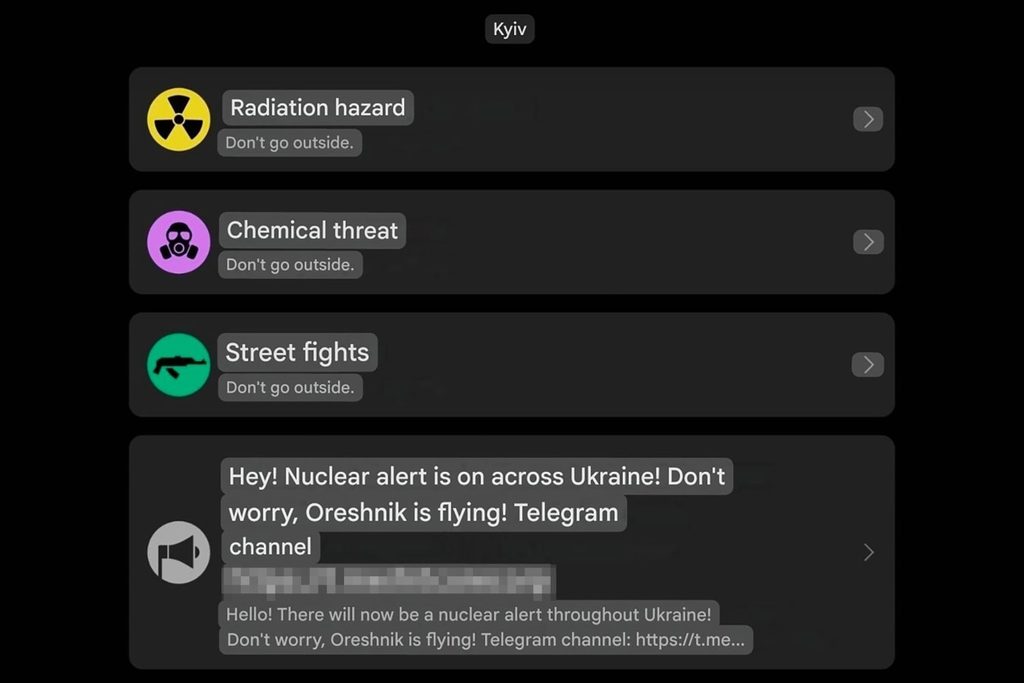
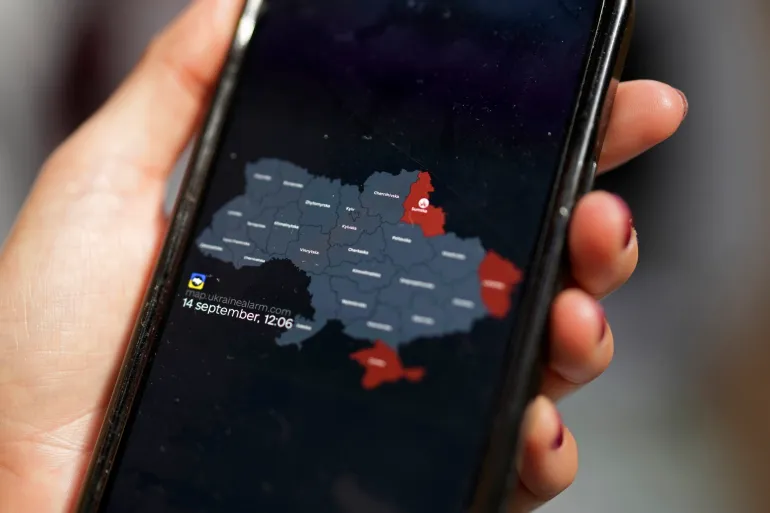

A widely used application in Ukraine issued high-level air-raid alerts across the country. Some residents, including those in the capital, Kyiv, received warnings about dangerous radiation, chemical weapons attacks and street fighting.
A few hours later, Russian officials reported that a similar alert application had also been hacked, sending false notifications, some containing obscene language. It remains unclear who was responsible for the incidents or whether the two attacks were connected.
Ukraine’s Air Force urged residents to follow information from other official channels. In a message on Telegram, it said the Air Alarm application might have been compromised by hostile actors, confirmed there was no radiation threat and called on people to remain calm.
The government temporarily suspended the application for repairs. Some of the false messages were written in Russian, raising suspicions among recipients that they were not genuine.
Olena, a resident of Kyiv, told the BBC that she was initially frightened.
“I am prepared for power cuts, heating disruptions and water shortages, but I am not prepared for a nuclear attack,” she said.
She explained that her husband had also received messages warning of street fighting in Kyiv, as well as other notifications written in Russian. This made her suspect the application had been hacked because their usual alerts are delivered in Ukrainian.
In Russia, the government said one of its public warning systems had suffered a major cyberattack that resulted in the distribution of false information.
An image of an alleged alert, shared on Telegram by Atesh, a pro-Ukraine group, claimed that P1-Sun drones carrying nuclear warheads had been deployed across Russian regions. It urged residents to immediately stockpile three weeks’ worth of food and seek shelter.
By Monday morning, there were no signs that the messages had caused widespread panic in Russia. Kremlin spokesman Dmitry Peskov said government websites were frequently targeted by cyberattacks.
Russia’s Ministry of Emergency Situations said the application was functioning normally again and that other public alert systems had not been affected.
Oleksander Merezhko, head of the Ukrainian parliament’s Foreign Affairs Committee, said the incident had not caused widespread panic because residents were accustomed to alerts and quickly became suspicious when they saw messages written in Russian.
The alerts in Ukraine were sent just minutes before a temporary ceasefire in the Kherson region was due to end. The truce was intended to help civilians leave Oleshky, a town under Russian control.
Fighting continued elsewhere. In Dnipro, 15 people were killed in an attack on a railway station on Thursday.