
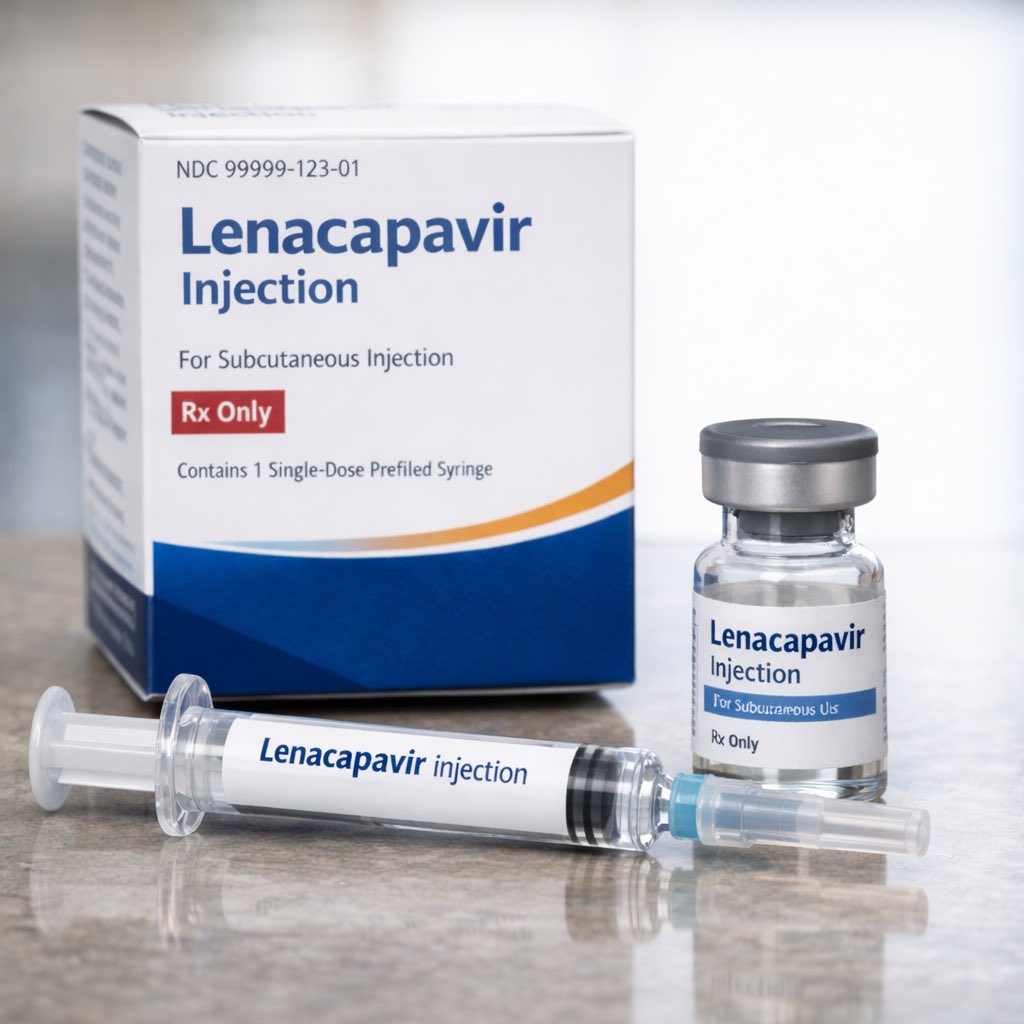

The manufacturer and organisations that supported the development of the generic version announced the approval on Monday, November 2, 2026. The injection is expected to cost 40 US dollars per person annually, approximately the same as a year’s supply of daily oral HIV prevention pills.
The injection offers a more convenient option because it does not need to be taken every day. Two clinical trials involving people at high risk of HIV infection found that it prevented almost all new infections.
Carmen Pérez Casas, who leads HIV-related work at Unitaid, said some people struggle to adhere consistently to daily pill-taking schedules, leaving them without the protection they need.
“We are much more hopeful because of lenacapavir,” she said.
The World Health Organization estimates that 41 million people worldwide were living with HIV last year, while 570,000 died from HIV-related causes.
Carolyn Amole, who leads the HIV programme at the Clinton Health Access Initiative, said the affordable version could help provide prevention to the 20 million people who need pre-exposure prophylaxis, commonly known as PrEP. PrEP is medication taken before potential exposure to HIV to prevent infection.
The cheaper version is not authorised for sale in the United States because Gilead Sciences’ original lenacapavir product, marketed as Yeztugo, still has market exclusivity. In the US, the original drug costs 28,218 dollars per year before insurance.
The FDA’s approval is a tentative one, a process used for generic medicines while the original product retains market exclusivity. It could help speed up approval in other countries.
Gilead had previously been the sole supplier of lenacapavir, but the drug was not reaching everyone who needed it in low- and middle-income countries. Last year, the company granted six manufacturers royalty-free licences to produce the medicine.
The licences cover selected countries in sub-Saharan Africa, Asia and Latin America. Other generic versions produced by different manufacturers must also obtain FDA approval before distribution.
The newly approved version was developed by India’s Dr. Reddy’s Laboratories through an agreement facilitated by Unitaid, the Clinton Health Access Initiative and Wits RHI.
Common side effects include reactions at the injection site, headaches and nausea. People receiving the drug must test negative for HIV before starting treatment and before each subsequent injection.
There have also been cases of drug-resistant HIV among people who received lenacapavir while unknowingly already infected.
The injection is expected to become available in some places within the coming weeks, although countries that require their own regulatory reviews may take longer.
Amole said funding would be needed both to purchase the drug and to deliver it to millions of people who need it, despite the approval marking an important step forward.