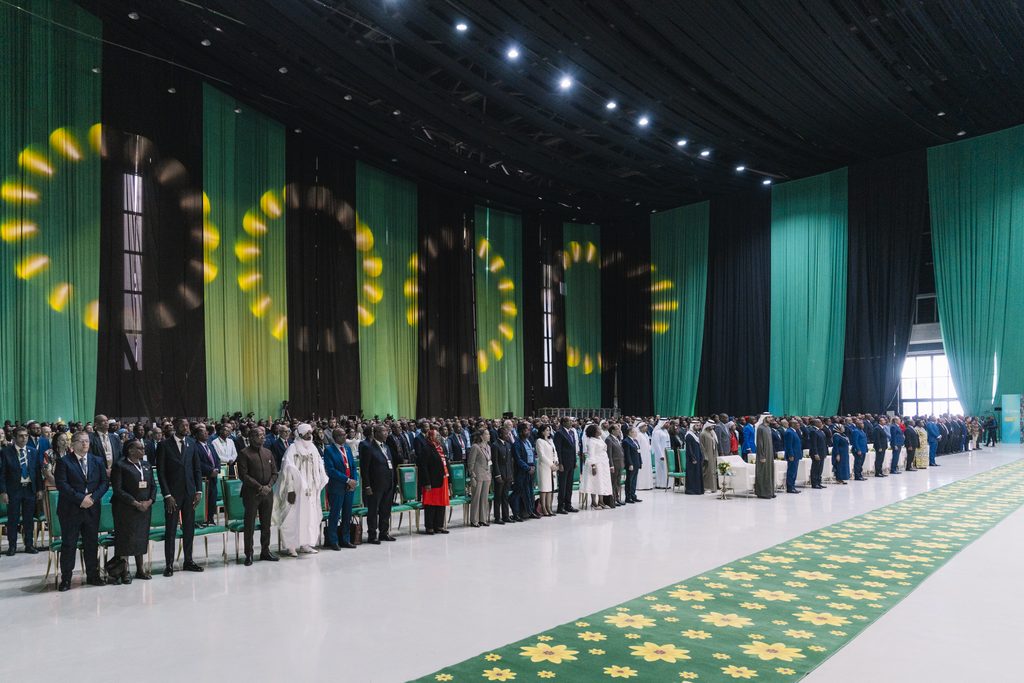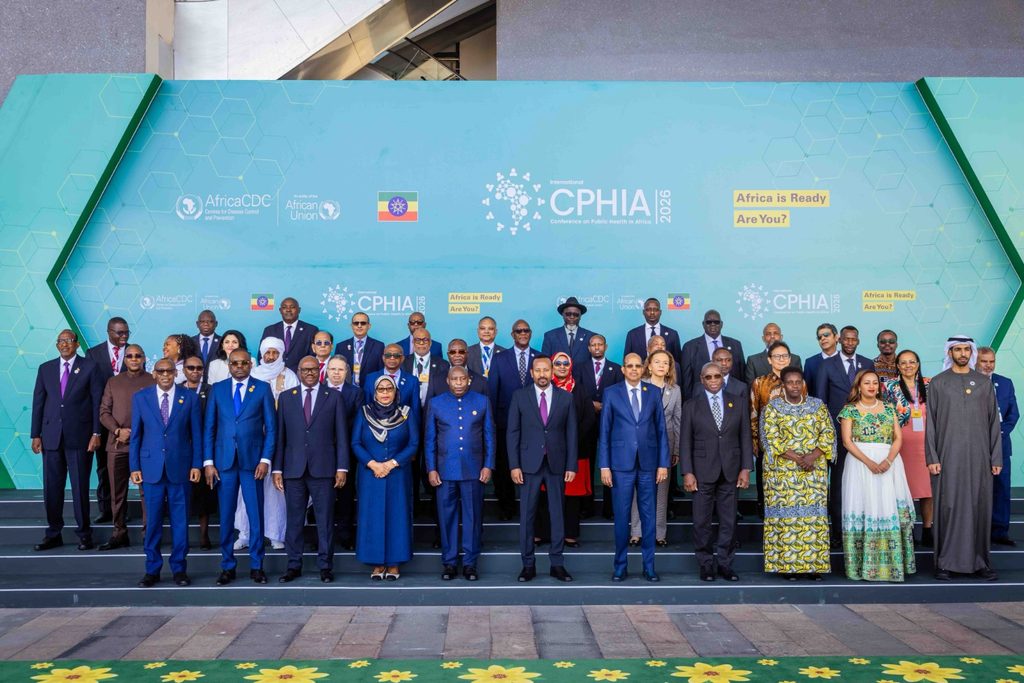
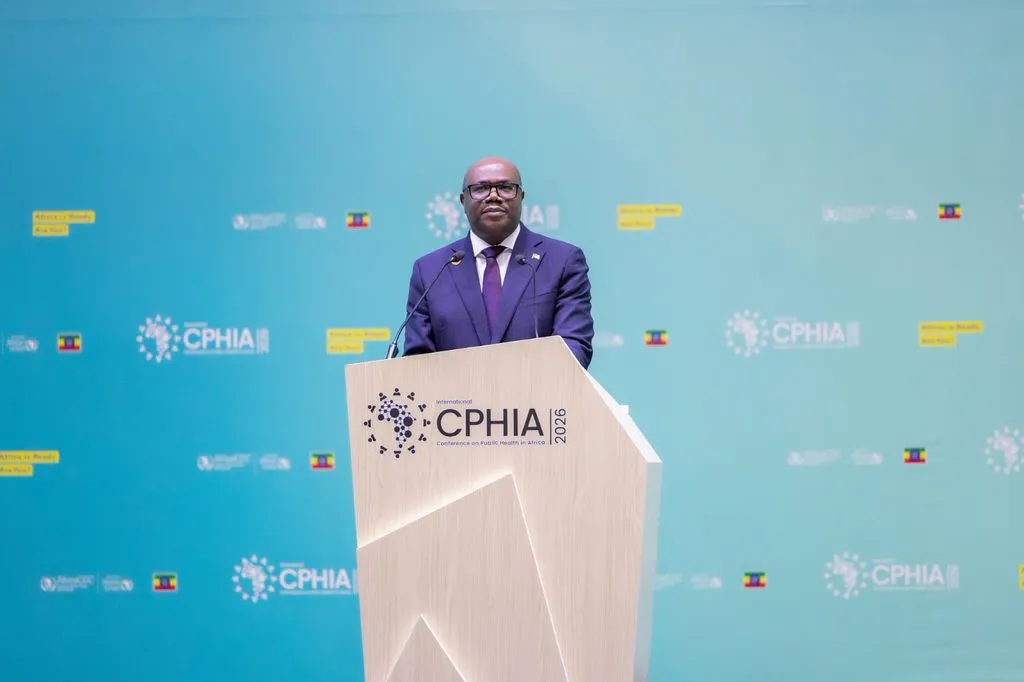
He made the remarks on Monday, November 23, 2026, while addressing participants at the Fifth International Conference on Public Health in Africa (CPHIA 2026), taking place in Addis Ababa, Ethiopia.
Dr Nsengiyumva attended the conference representing President Paul Kagame, who is the African Union’s Special Envoy for the Promotion of Domestic Health Financing.
He said the time had come for Africa to change how it finances healthcare, with countries taking greater responsibility for finding their own solutions instead of continuing to depend on external assistance.
“Foreign aid for health in Africa is declining sharply, while health challenges continue to increase, putting pressure on health systems that are already operating with limited resources,” he said.
“We cannot continue to depend on others to help us access the basic health services we need. As President Kagame has consistently emphasised, Africa must take responsibility for mobilising resources to finance its own health systems,” he added.
He explained that this did not mean Africa should end international partnerships, but rather establish a new approach to cooperation based on priorities set by African countries themselves.
“This does not mean rejecting partnerships. Instead, it means establishing new partnerships in which Africa determines its priorities and leads their implementation, while external support complements those efforts,” he said.
Rwanda’s Community-Based Health Insurance as a Model for Africa
Prime Minister Nsengiyumva highlighted four lessons African countries could learn from Rwanda as they work towards building self-reliant healthcare systems.
The first is domestic resource mobilisation for healthcare. He cited Rwanda’s Community-Based Health Insurance scheme, commonly known as Mutuelle de Santé, which has helped millions of Rwandans access healthcare at an affordable cost.
He said that over the past 25 years, the scheme had reached approximately 89 per cent of Rwandans, helping them access essential medicines and specialised medical services.
He noted that since 2000, the infant mortality rate had declined from 107 deaths per 1,000 live births to 27, while maternal mortality had fallen from 1,071 to 149 deaths per 100,000 live births.
During the same period, life expectancy increased from 50 years to 70.5 years.
Nsengiyumva said these improvements had been achieved through increased investment in healthcare personnel, technology and infrastructure, but that Mutuelle de Santé had played a major role in making healthcare more accessible to the population.
He explained that as the scheme expanded, its financing model also needed to be revised to ensure that the financial burden did not remain solely on the government.
He noted that in 2026, Rwanda introduced a new contribution system for community-based health insurance based on people’s ability to pay.
Under the system, people with higher incomes contribute more than those with lower incomes, while the government covers contributions for those who cannot afford them.
He said members of Mutuelle de Santé currently contribute 37 per cent of the scheme’s total financing, while the remaining 63 per cent comes from the government and the private sector.
He added that payment arrangements had also been made more convenient for citizens, while the insurance scheme had been expanded to cover services such as cancer treatment, kidney transplants and heart surgery.
How Rwanda Contained the Marburg Outbreak
The second lesson Dr Nsengiyumva highlighted was the importance of ensuring that African countries are always prepared to respond to disease outbreaks rather than waiting until an outbreak occurs before mobilising resources.
He cited the Marburg outbreak in Rwanda in 2024, saying the country managed to contain it within a short period because it already had established healthcare systems and disease surveillance mechanisms.
He said that when the outbreak emerged, community health workers, laboratories, hospitals and disease surveillance institutions were immediately mobilised.
During the response, community health workers screened more than 9.5 million people in a country with a population of approximately 14 million.
Nsengiyumva said Rwanda managed to contain the outbreak in just three months, despite it being the third-largest Marburg outbreak ever recorded globally.
He noted that the case fatality rate in Rwanda was 22 per cent, lower than rates recorded in some other outbreaks, where the disease has claimed the lives of up to 90 per cent of those infected.
He stressed that disease testing and surveillance capacity, trained personnel and rapid response systems should have dedicated funding rather than relying on resources mobilised only when an outbreak occurs.
Africa Urged to Manufacture Its Own Medicines and Vaccines
The third lesson Nsengiyumva highlighted was that Africa cannot claim to be self-reliant in healthcare while continuing to depend heavily on other countries for medicines, vaccines and other medical supplies.
He said African pharmaceutical manufacturers needed a stable market to enable them to increase production and invest in their operations.
He urged African countries to pool their purchasing power through the African Pooled Procurement Mechanism and support quality-assured products manufactured on the continent.
He also emphasised that international partnerships should go hand in hand with technology transfer and efforts to strengthen the skills and capabilities of Africans.
He said Rwanda was proud to host the headquarters of the African Medicines Agency (AMA) in Kigali and would continue supporting its operations.
Africa Urged to Move from Commitments to Action
The fourth lesson highlighted by the Prime Minister was the need for African countries to prioritise practical action instead of continuing to make decisions and commitments that are not implemented.
He said the continent did not lack agreements or programmes outlining its development ambitions. Rather, the challenge was ensuring that allocated funds actually reached health facilities and translated into better services for citizens.
He stressed the importance of tracking both approved funding and resources pledged for healthcare, while assessing whether the money had reached the institutions intended to use it.
He called for corrective measures wherever weaknesses are identified and for leaders to be held accountable for implementing agreed decisions.
In his concluding remarks, Nsengiyumva said no African country could independently build all the healthcare capacity it needed, making cooperation essential in research, the procurement of medicines and medical supplies, and the development of pharmaceutical industries.
He emphasised that Africa’s ability to become self-reliant in healthcare would depend on the progress made by individual countries, but even more on what they could achieve by working together.
CPHIA 2026, which began on November 23 and runs until November 27, is focused on building Africa’s capacity to secure its own health needs and reduce dependence on foreign aid.