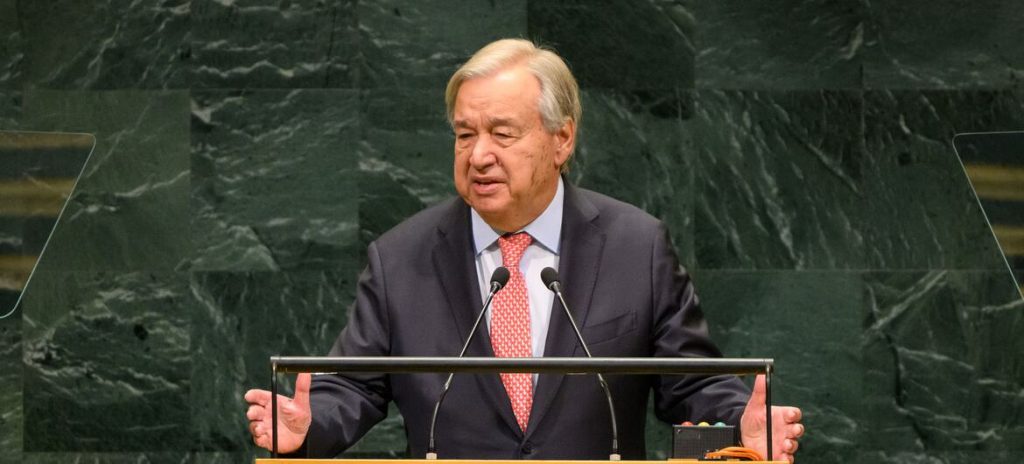

Guterres made the remarks while opening the fifth edition of the Global Africa Business Initiative, known as Unstoppable Africa, in New York, United States. The event brought together leaders, investors and other partners to discuss Africa’s development.
He said Africa has enormous opportunities rooted in its natural resources, population and capacity for innovation. He noted that the continent has the world’s largest share of young workers, approximately 30 percent of global mineral resources and 60 percent of renewable energy potential.
“We are gathered here around one simple truth. Africa’s future must be determined by Africans, for Africans,” Guterres said.
He added that Africa is no longer simply a place where business activities take place, but is increasingly becoming a continent where business is conducted in partnership with Africans.
Guterres said Africa represents a market opportunity valued at three trillion dollars, adding that the world is increasingly recognizing its role in the global economy.
On technology, Guterres said Africa continues to make progress, highlighting Tunisia’s growing competitiveness in artificial intelligence and Rwanda’s leadership in using drones to deliver medicines and other supplies nationwide.
“Technology is also moving fast. Tunisia is competing globally in artificial intelligence, while Rwanda is leading in delivering medicines through drones at the national level,” he said.
Rwanda’s Prime Minister, Dr. Justin Nsengiyumva, said the country is ready to contribute to advancing technology in Africa through its AI policy, a dedicated artificial intelligence institution and increased investment in related infrastructure.
“Let me assure you that Rwanda is determined to be an active partner in shaping the future of artificial intelligence. But participating in this journey requires more than data, processing capacity and computing power. It requires people with knowledge and skills,” he said.
Dr. Nsengiyumva said achieving these ambitions would require cooperation among African countries, continent-wide regulatory frameworks and systems that allow technology products to scale across different markets.
He emphasized that Africa must develop its own artificial intelligence technologies rather than continuing to depend on solutions created elsewhere.