
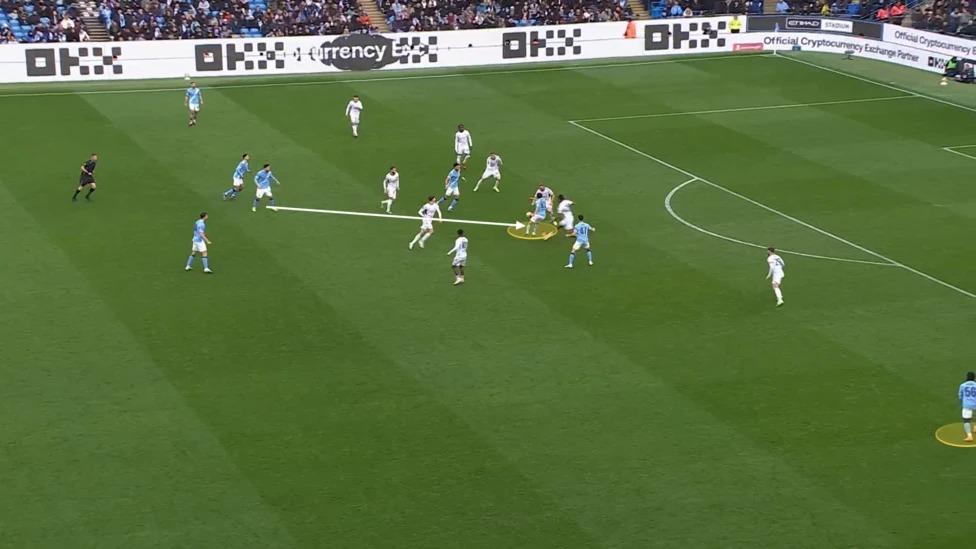

Pep Guardiola’s tactical evolution at Manchester City may have roots in a 2006 newspaper column he wrote for El País, analyzing Spain’s 3-1 win against Tunisia. The column foreshadowed his approach to breaking down low-block defenses, a hallmark of City’s attacking strategy this season, according to BBC Sport.
At City, attackers now operate narrowly and fluidly, a contrast to 2017-18 when wide wingers like Leroy Sane and Raheem Sterling stretched defenses. Guardiola’s system emphasizes precise timing, player positioning, and patience, minimizing risks of turnovers while exploiting space.
Guardiola highlighted in the column: “When you decide to attack [with the ball], you have less space. If you counter-attack, the ball belongs to the opponent.” This principle has shaped City’s use of Erling Haaland and Tijjani Reijnders on fast breaks, with the team scoring more counter-attack goals than the previous two Premier League seasons combined.
City’s recent 3-0 victory over Fulham demonstrated the implementation of these tactics. Antoine Semenyo and Haaland acted as split strikers, with Phil Foden centrally positioned, mirroring Spain’s 2006 narrow and fluid front three. Full-backs like Matheus Nunes and Rayan Ait-Nouri exploited the space created by these narrow movements, while Rodri maintained a single pivot to orchestrate build-up play.
Guardiola stresses the importance of timing: attackers dropping deep too early can congest midfield space, forcing players like Nico O’Reilly and Bernardo Silva to drop alongside Rodri, stalling attacks. By waiting for the right moment, City can maintain possession, draw opponents in, and open wide channels for full-backs.
This player-led approach reflects Guardiola’s adaptability. He tailors tactics to the strengths of his squad, optimizing positions for maximum efficiency while retaining core principles, dominating possession, breaking low blocks, and pinning opponents in their own half.
Guardiola’s consistent philosophy over 20 years underscores his long-term tactical vision. The 2006 column illustrates not only his footballing intelligence but also his ability to adapt classic principles to modern challenges, ensuring City remain one of the Premier League’s most dynamic and unpredictable sides.