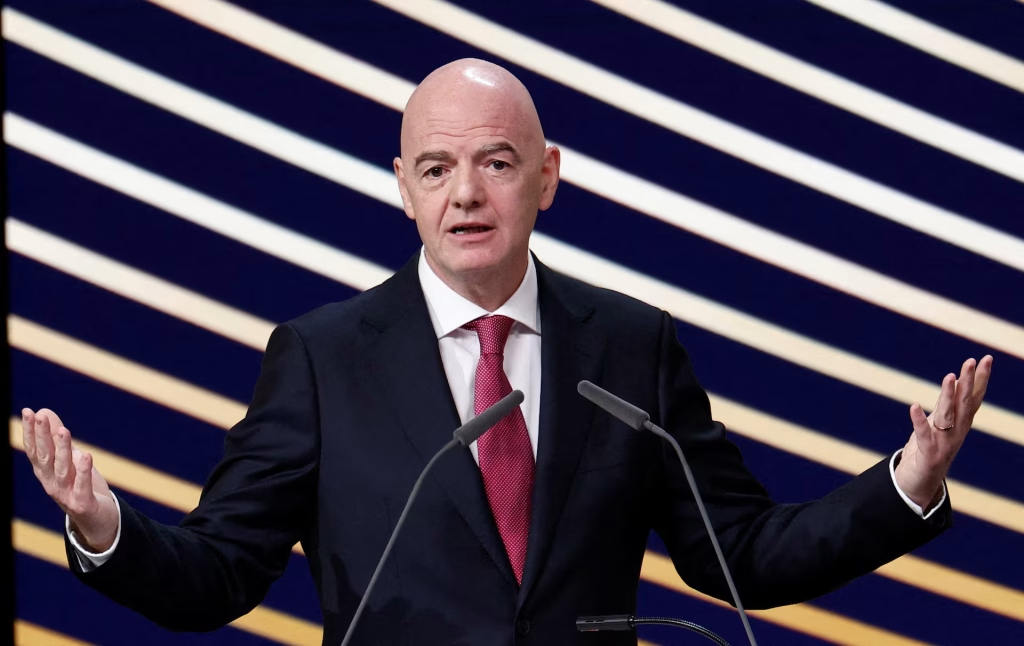

The growing uncertainty follows the collapse of a controversial proposal to sell a stake in FIFA’s commercial rights, a plan that drew strong criticism from several football governing bodies and triggered renewed scrutiny of Infantino’s leadership.
Although the proposal was ultimately abandoned, it has exposed divisions within global football, with several major associations questioning FIFA’s direction under the Swiss-Italian administrator.
Reports indicate that some of Europe’s leading football nations, including Wales, have withdrawn their support for Infantino’s expected re-election campaign, while England is also reportedly considering taking the same position. Other football authorities, including UEFA and CONCACAF, have publicly expressed concerns over FIFA’s governance and recent decision-making.
Despite losing the confidence of some of football’s traditional powerhouses, Infantino may still have a strong path to re-election because of FIFA’s unique voting system.
Each of FIFA’s 211 member associations is allocated one vote, regardless of the country’s size, football history, or commercial influence. As a result, smaller football nations collectively hold enough voting power to determine the outcome of presidential elections.
Many of these associations have benefited significantly from FIFA’s development programs, which have financed football infrastructure, youth development, and administrative projects across Africa, Asia, Oceania, the Caribbean, and other developing football regions.
Observers say these investments have strengthened FIFA’s relationship with smaller member associations, many of which view the organization’s financial support as essential to growing the sport in their countries.
At the same time, critics argue that the dependence on FIFA funding has reinforced Infantino’s political influence by making smaller associations less likely to support efforts aimed at changing the organization’s leadership.
The disagreement over FIFA’s commercial strategy has also fueled discussions within European football about possible reforms to the governing body’s decision-making processes.
While some football leaders have suggested convening an Extraordinary FIFA Congress to challenge Infantino’s leadership, such a move would require broad international support and remains difficult to achieve given the current balance of votes across FIFA’s membership.
The latest developments highlight a long-standing reality within world football governance: influence on the pitch does not necessarily translate into influence at the ballot box.
As debate over FIFA’s future intensifies, the votes of smaller football nations—rather than those of the sport’s traditional giants—could ultimately determine whether Gianni Infantino remains at the helm of world football.