
He warned that if he is dissatisfied with its terms or if Tehran fails to comply, he would not hesitate to resume large-scale military strikes against the Middle Eastern nation.
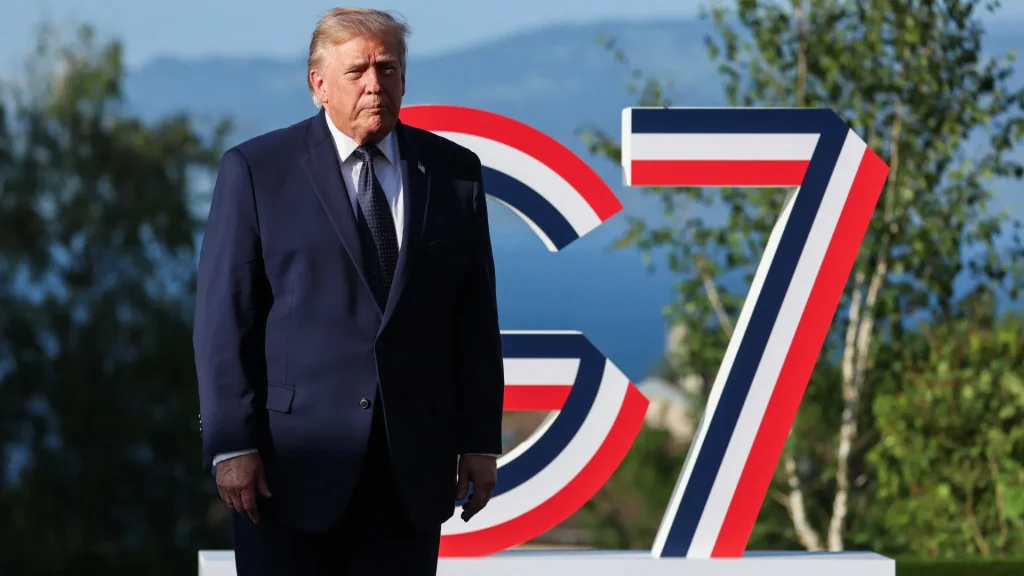
Trump made the remarks on June 17, 2026, while attending the G7 Summit in France.
On June 14, 2026, the United States and Iran agreed to a preliminary ceasefire arrangement. The agreement is scheduled to be signed in Switzerland on Friday and will remain in effect for 60 days, during which both sides will negotiate the conditions required to reach a permanent agreement.
The deal includes several key issues, such as Iran abandoning its nuclear weapons ambitions, discussions on compensation for damages caused during the conflict, the possible lifting of sanctions imposed on Iran, and efforts to establish lasting peace in the Middle East.
However, Trump stressed that the current understanding is only a preliminary framework and could change if he is not satisfied with how events unfold.
“It’s an agreement in principle. If I don’t like it, we’ll go back to shooting at them and dropping bombs on their heads. If they don’t accept it, if they behave badly, we’ll go back to dropping bombs on them. Understand?” Trump said.
The U.S. President also stated that the negotiations do not currently include the immediate removal of sanctions that have been imposed on Iran over the years.
He argued that his administration has been involved in securing a number of significant agreements, even though many people may not fully appreciate their importance.
The conflict involving Iran began on February 28, 2026, when Israel and the United States launched major strikes against the country, killing several senior officials, including Ali Khamenei and others. In response, Iran closed the Strait of Hormuz, through which more than 20% of the world’s petroleum products are transported, triggering severe disruption to the global economy.