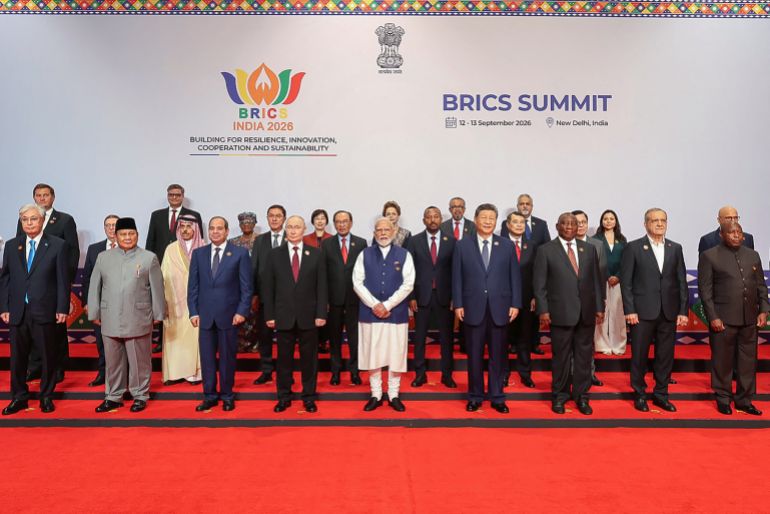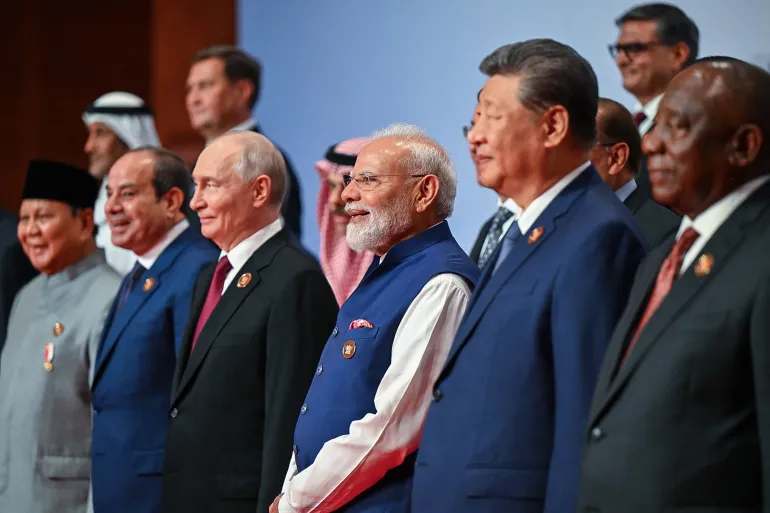
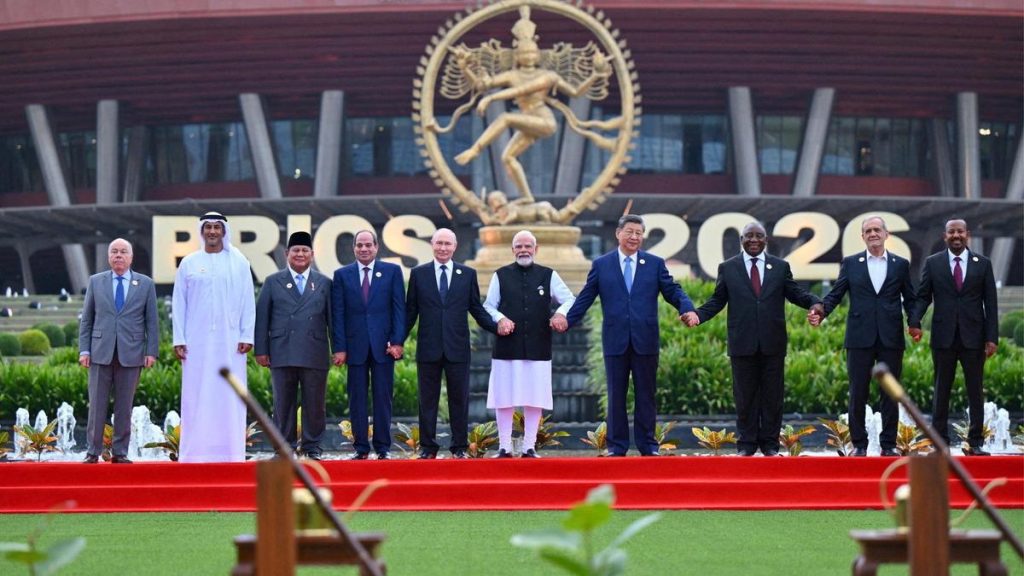

Leaders of the BRICS group have adopted a joint declaration at their summit in New Delhi, India, despite disagreements over major international conflicts.
The 11-member bloc, which represents nearly half of the world’s population and about 40 percent of global GDP, called for restraint in the Middle East and urged countries to avoid actions that could worsen tensions.
However, the declaration did not directly blame the United States, Israel, Iran or Gulf countries for the ongoing conflict. This was seen as a sign of the divisions within the group, especially because Iran and the United Arab Emirates are both BRICS members but have been on opposing sides of the conflict.
Chinese President Xi Jinping called for a political solution and a lasting ceasefire, while Indian Prime Minister Narendra Modi said BRICS had reached a new stage and that developing countries should have a bigger role in shaping global rules.
The war in Ukraine was also addressed in general terms. BRICS leaders supported dialogue and diplomacy but did not mention Ukraine by name. They also criticised sanctions that are imposed without approval from the United Nations Security Council.
On Palestine, the group took a stronger position. The declaration opposed the forced displacement of Palestinians, called for humanitarian aid to reach Gaza and backed the creation of an independent Palestinian state based on the 1967 borders.
The leaders also criticised unilateral tariffs and other trade measures that they said could harm global trade and supply chains.
The summit shows both the growing influence and the limits of BRICS. While its members want a stronger role for developing countries in global affairs, disagreements between them can make it difficult to reach common positions on major crises.