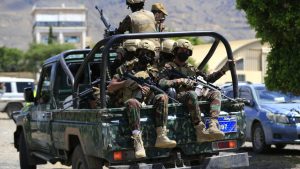
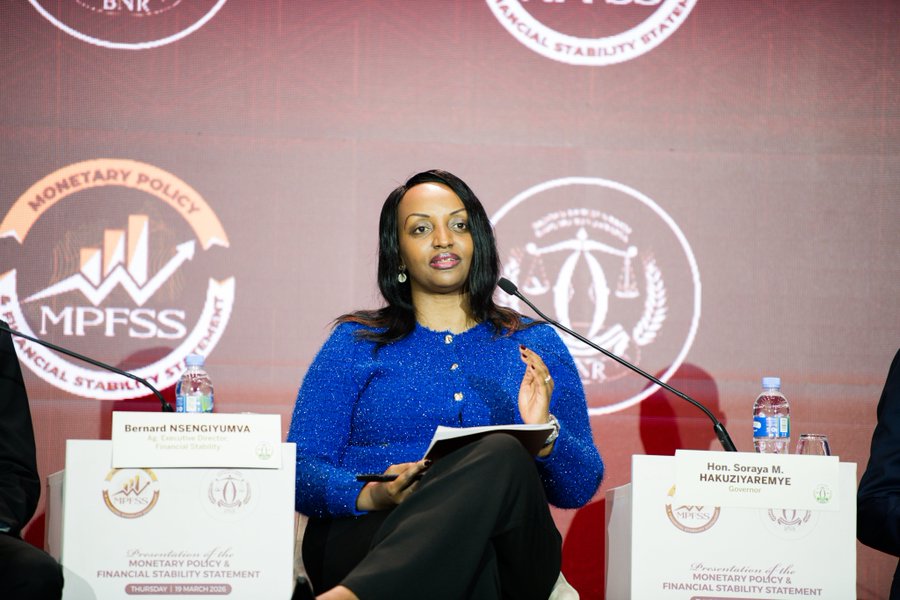

The Governor of the National Bank of Rwanda, Soraya Hakuziyaremye, has said that if the ongoing conflict involving Israel, United States, and Iran continues for a long time, it will affect the economy and lead to increases in the prices of certain goods. However, she assured that the government will introduce subsidies if the situation begins to heavily burden citizens.
The conflict between the United States, Israel, and Iran, now in its third week, has already impacted the global economy after disrupting the Strait of Hormuz, through which nearly 20% of the world’s oil supply passes.
As a result, global oil prices have surged by over 43%, with a barrel now exceeding $108.
Many of the goods imported by Rwanda come from countries such as China, India, and the United Arab Emirates.
Petroleum products entering the East African region account for about 27%.
Speaking to the media on March 19, 2026, Governor Hakuziyaremye noted that over the past five years, global crises have driven up fuel prices, but the government stepped in to subsidize the sector.
She emphasized that Rwanda has sufficient fuel reserves that can be used in case of supply disruptions, ensuring continuity for citizens and especially for the transport sector.
“We want to reassure the public that reserves are sufficient. There are always strategic fuel reserves in place so that if supply is disrupted, they can be used to ensure that individuals and private sector operators, especially in transport, are not severely affected. When necessary, as seen in 2022 and 2023, the Government of Rwanda can provide subsidies to prevent sharp increases in fuel prices,” she said.
“These are some of the measures the government is prepared to implement to ensure our economy remains stable and that there are no major impacts on businesses and Rwandans in general.”
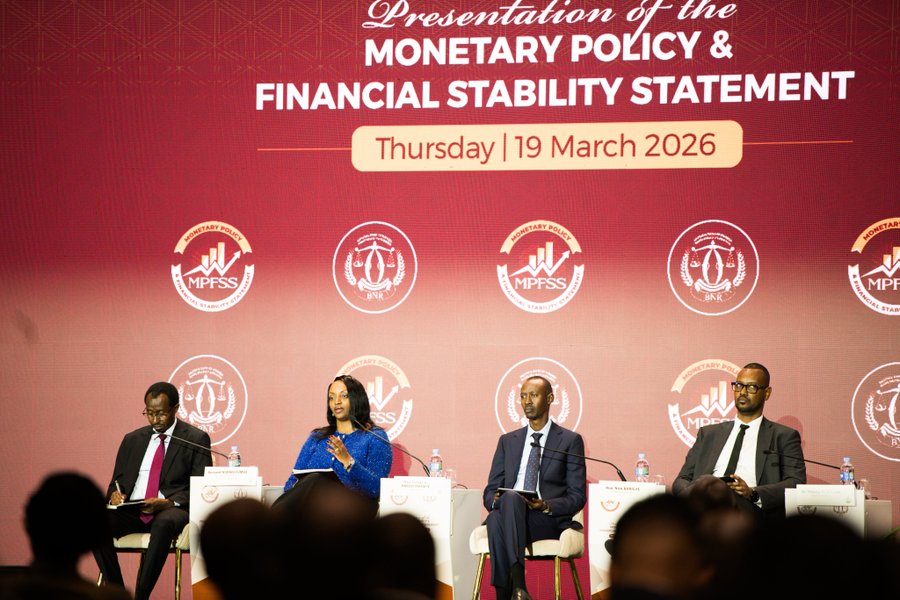
The National Bank of Rwanda also stated that it will continue efforts this year to keep inflation within the target range of 2% to 8%.
Fuel prices in Rwanda are reviewed every two months. The latest revision, made on March 4, 2026, set the price of petrol at 1,989 Rwandan francs per liter, while diesel costs 1,948 francs per liter. The next revision is expected in May.